Wednesday, August 12, 2026
Live streams for watching the August 13 Total Solar Eclipse.
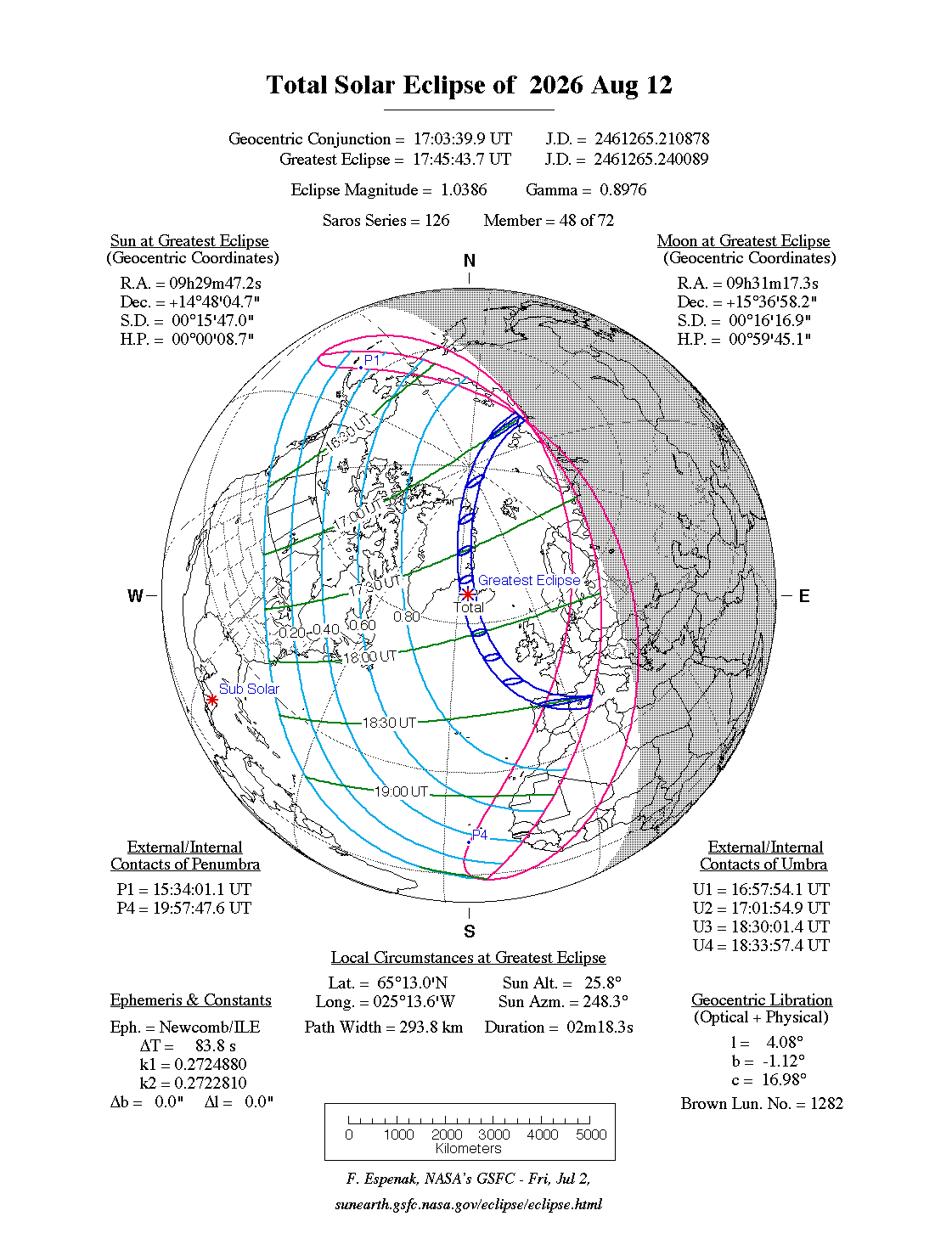
On the early morning August 13 (afternoon August 12 UT) there is a Total Eclipse of the Sun, Visible from the Arctic, Greenland, Iceland and Spain. Australia misses out completely, and Iceland looks like it will be clouded out.
Not to despair, Several places are doing live-streams of the Eclipse, so you can watch it in comfort, except of course it is in the wee small hours from Australia:
NASA 1:15 pm US EST (3:15 am AEST) : https://www.nasa.gov/live/
ESA 19:30–20:45 CEST (3:30 am-4:45 am AEST): https://www.esa.int/Science_Exploration/Space_Science/Total_solar_eclipse_how_to_watch_live_from_home
Time and date (1:04 am ACST-5:27 am ACST the site sets itself to your local time): https://www.timeanddate.com/live/eclipse-solar-2026-august-12
SLOOH's Livestream 16:30 UTC (2:30 am AEST): https://www.youtube.com/watch?v=8nURX5lnT50
Labels: live-stream, solar eclipse, webcast

Thursday, March 13, 2025
Twilight Partial Lunar exclipse (Friday 14 March, 2025) and Livestreams of the Total Eclipse
 |  |  |
| Evening sky on March 14 looking east as seen from Brisbane at 18:15 AEST, 10 minutes after Moon rise, the inset is the moon a | Evening sky on March 14 looking east as seen from Melbourne at 19:45 AEDST, 5 minutes after Moon rise | Evening sky on March 14 looking east as seen from Sydney at 19:35 AEDST, 20 minutes after Moon rise |
On the early evening of Friday, 15 March there is a partial lunar eclipse low in the twilight in the Eastern sates. The Moon rises as the eclipse is finishing with only a small portion of the moon is in the deepest part of Earth's shadow (elsewhere in the world sees a Total Lunar Eclipse).
Live streams of the eclipse can de see at:
Time and date March 14 16:00 AEDST: https://www.timeanddate.com/live/eclipse-lunar-2025-march-14
Virtual telescope Live webtv March 14 17:00 AEDST: https://www.virtualtelescope.eu/webtv/
Griffith University in California March 14: https://www.youtube.com/watch?v=BguB5KSBYd0
| City | Moon rise | Umbral eclipse ends |
| Brisbane | 8:05 AEST | 18:41 AEST |
| Melbourne | 19:40 AEDST | 19:47 AEDST |
| Sydney | 19:14 AEDST | 19:47 AEDST |
Labels: eclipse, live-stream, lunar eclipse, Moon, partial, unaided eye
Sunday, April 07, 2024
Live streams of the 2024 Total Solar Eclipse (8 April UT).
 |  |
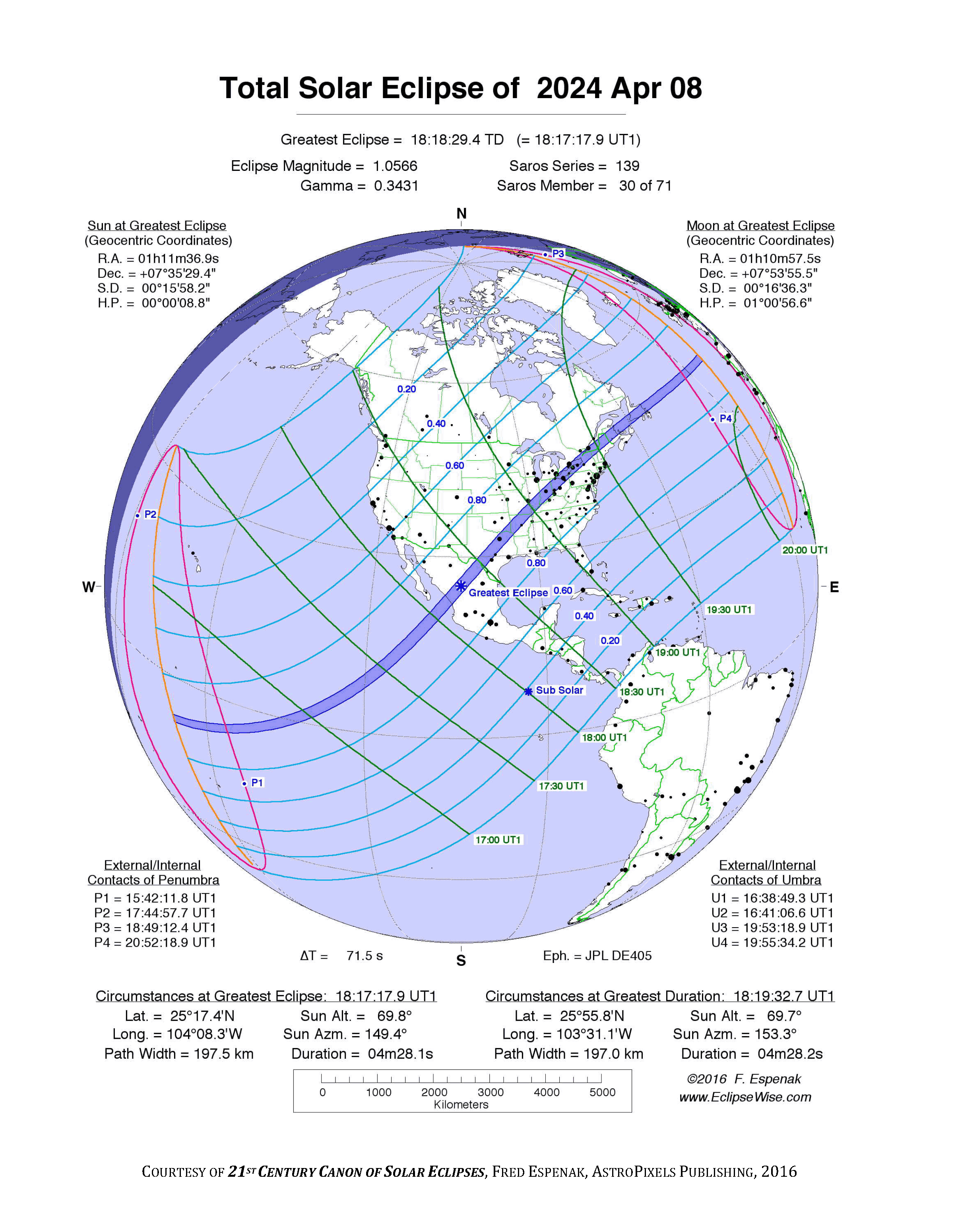
| Total Solar Eclipse as seen from Dallas, Texas on 8 April (US time 9April in Australia). Simulated in Stellarium. | Chart of the path of the solar eclipse from Fred Espenak's eclipse site |
Sadly, none of the 2024 total solar eclipse is visible from Australia. However, there are several live streams of the event we Southern Hemispherians can log into. Again, sadly, the eclipse is starting at 16:38 UT on the 8th, and is greatest at 18:17 UT. This translates to around 2 am and 4 am on the 9th (Tuesday) in Eastern Australia, so you have to be up very, very early. If you are a diehard eclipse fan, here are some live streams for you (many may be oversubscribed or choked for band width, so you may have to hop around to find one that works).
Time and date: Live-stream starts 2 am AEST on the 9th. https://www.timeanddate.com/live/eclipse-solar-2024-april-8
Virtual Telescope Project: Live-stream starts around 3 am AEST on the 9th. https://www.virtualtelescope.eu/webtv/
NASA TV. Live-stream starts around 3 am AEST on the 9th. https://science.nasa.gov/eclipses/future-eclipses/eclipse-2024/live/
Exploratorium. https://www.exploratorium.edu/eclipse
Space.com. Live-stream stars around 3 am AEST on the 9th. https://www.space.com/watch-total-solar-eclipse-april-8-online-free-livestreams
Labels: eclipse, live-stream, solar eclipse, webcast
Sunday, May 15, 2022
How to view the may 16, 2022 Lunar eclipse via live stream

However there are a number of Livesterams available so we can watch it
NASA:
https://moon.nasa.gov/news/173/livestream-the-eclipse/
Space weather:
Time and Date: https://www.timeanddate.com/live/eclipse-lunar-2022-may-16
Space.com https://www.space.com/super-blood-moon-total-lunar-eclipse-webcasts-may-2022
hopefully some of them will not be chocked with viewers so you can see something. It will tide us over until the 8 November total Lunar Eclipse.
Labels: eclipse, live-stream, Moon, webcast
Saturday, June 20, 2020
Live streams of the Annular eclipse of Sunday, June 21, 2020

Sunday, June 21 is not only the winter Solstice, but also when an annular eclipse of the sun occurs.
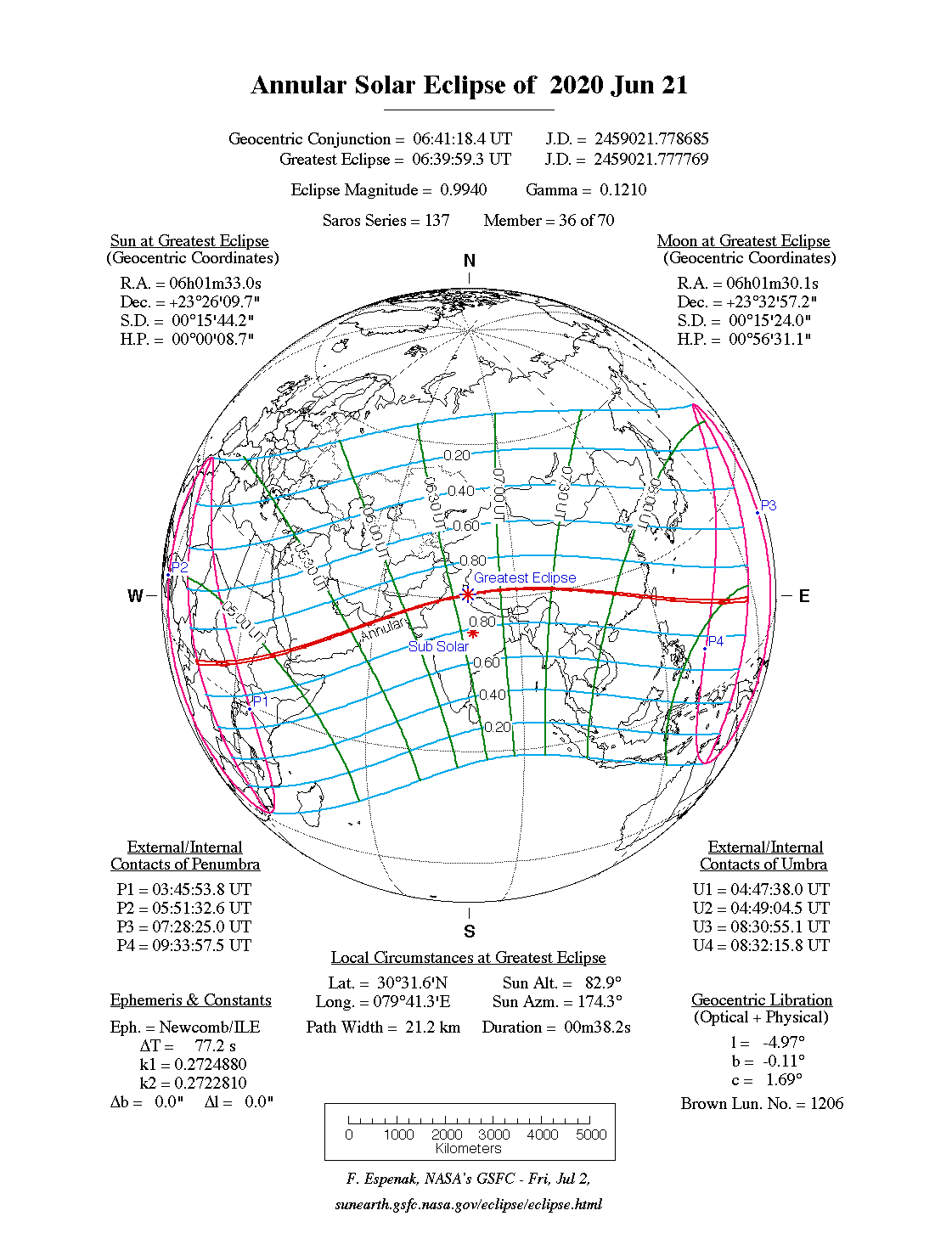
In an annular eclipse, the Moon does not fully cover the Sun's dsk leaving a thin rim of sun at maximum eclipse. These so called :ring of Fire Eclipses can be very dramatic especially if caught as the sun is rising or setting.
The eclipse path travels though Asia, the Arabian peninsula and Africa. Asutalia misses out except for DArwin, which sees a tiny chip out of the edge of the Sun just on sunset.
Because of the COVID-19 epidemic, there will be fewer expeditions and few live streams of this event, whoever this Universe Today article links to a couple.
Gianluca Masi and the Virtual Telescope Project will be doing a live webcast of the "ring of fire" eclipse from across Asia and Africa starting at 5:30 UT (15:30 AEST, 15:00 ACST).
Another is from Indian Astronomer Ajay Talwar starting at 5:00 UT (15:00 AEST. 14:30 ACST)
https://www.youtube.com/watch?v=-DnLP7e3XX0
So set your alarms and happy watching.
Labels: eclipse, live-stream, solar, webcast
Monday, November 11, 2019
Live Streaming and Webcasts of the Transit of Mercury (12 November/11 November UT)
 Transit of Mercury as seen from Australia in November 2006 at around
8:30am, click to enlarge. Mercury is the tiny dot roughly in the
centre-top.
Sadly, Australia will not get to see it (we will get to see the next in 2032 though). However, there are any number of live web-casts you can follow.
While these are all at horrible times here in Australia, if you are a late stayer or an early riser, you can catch a rare event.
| Event | Universal Time | AEDST |
| Contact I | 12:35:27 | 23:35 (11th) |
| Contact II | 12:37:08 | 23:37 (11th) |
| Greatest Transit | 15:19:48 | 02:19 (12th) |
| Contact III | 18:02:33 | 05:04 (12th) |
| Contact IV | 18:04:14 | 05:04 (12th) |
Webcasts:
Time and date: https://www.timeanddate.com/live/
Space.com: https://www.space.com/mercury-transit-2019-viewing-guide.html
Vimeo: https://livestream.com/GriffithObservatoryTV/MercuryTransit2019
Royal Observatory: https://www.rmg.co.uk/discover/explore/when-is-the-next-transit-of-mercury
Labels: live-stream, Mercury, transit, webcast
Monday, July 01, 2019
Live Wecasts/streaming of the Total Solar eclipse July 2, 2019
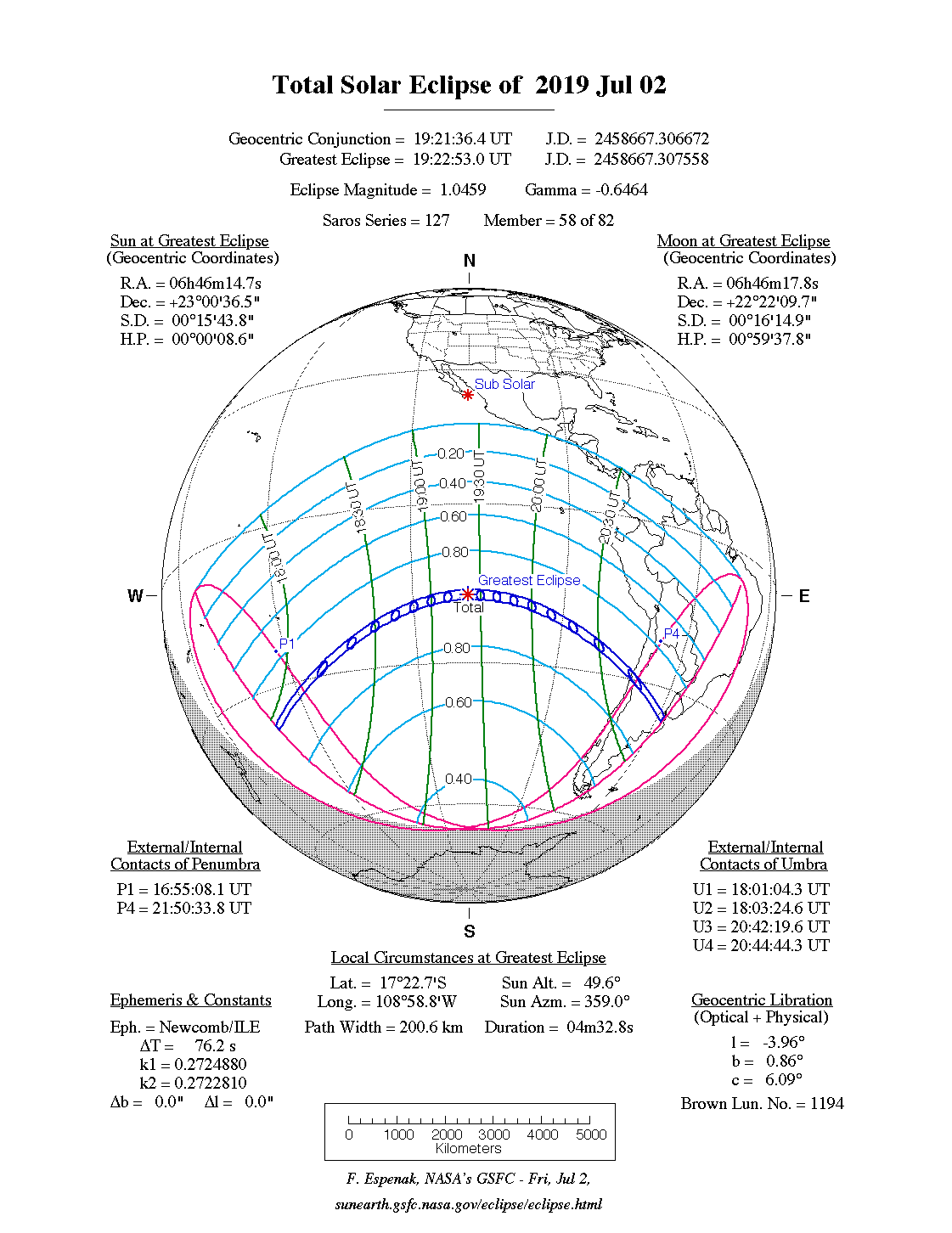
While Australia will not see this there are a number of webcams and live sterams you can watch it on.
The ESO live stream from LaSilla begins 19:15 UT (5:15 am AEST July 3) almost one and a half hours before totality.
https://www.eso.org/public/events/astro-evt/solareclipse2019/
The exploratorium will webcast from Chile at a similar time
https://www.exploratorium.edu/video/total-solar-eclipse-live-july-2-2019
Time and date will livestream the eclipse on YouTube beginning at 1900 UT (5:00 am AEST July 3)
The the Space.com home page will also have live eclipse views.SO you have a lot to pick from to view as you enjoy your morning coffee.
Labels: eclipse, live-stream, public outreach, solar, webcam
Monday, August 21, 2017
Seeing the August 21 (UT) total eclipse on livestream

Unless you have been living under a rock you will know that on August 21 (UT) a total eclipse will sweep across the United States. The eclipse (beginning partial) starts at 16:05 UT (2:05 22 August AEST, 1:35 ACST) on the west coast of the US, ending (end of partial eclipse) at 20:09 UT on the east coast (6:09 AEST 22 August, 5:39 ACST).
This interactive map shows you that path of the eclipse and the timings for partial eclipse and totality along the path. For those of us who cannot be there to enjoy the spectacle, there are multitudes of live streams (weather permitting of course).
Of course, the number of people attempting to watch will be enormous, so be prepared for frequent crashes, but here are some highly recommended sites (Australians note, this take place in the early hours of the morning for us):
NASA live stream 12pm – 4pm EDT 21 August (2 am-6am AEST 22 August):
NASA TV https://www.nasa.gov/eclipselive
Facebook live https://www.facebook.com/NASA/videos/10155497958441772/
YouTube https://www.youtube.com/watch?v=wwMDvPCGeE0
Ustream http://www.ustream.tv/nasahdtv
NASA EDGE Live from Carbondale (21 August 11:45am – 4:15pm EDT - 1:45 am- 6:15 am AEST 22 August)
NASA Edge https://www.nasa.gov/eclipselive/#NASA+EDGE
Ustream http://www.ustream.tv/nasaedge
Facebooklive https://www.facebook.com/nasaedgefan/
Full NASA site: https://eclipse2017.nasa.gov/eclipse-live-stream
Virtual telescope project (1 p.m. EDT (1700 GMT. 1 am AEST 22 Aug)): https://www.virtualtelescope.eu/webtv/
SLOOH live cast starting at 12 pm EST (16 UT; 2 am AEST 22 August) https://live.slooh.com/shows/event-details/393
Space.com live cast (via SLOOH) https://www.space.com/19195-night-sky-planets-asteroids-webcasts.html 1:30 a.m. EDT (1530 GMT) Aug. 21 (1:30 am 22 August AEST)
The Exploratorium12 p.m. EDT (1600 GMT, 2 am AEST 22 Aug) https://www.exploratorium.edu/eclipse
Labels: eclipse, live-stream, public outreach, solar, webcam



 Click to read about or order
 Click to read about or order
 Click to read about or order
 Click to read about or order