Saturday, May 30, 2026
"Blue" Apogee Full Moon (with Occulation) 31 May, 2026
 |  |
| Full Moon May 31 18:42 ACST, 90 minutes after sunset as seen from Adelaide, similar views will be seen form the rest of Australia at the equivalent local time (click to embiggen). | Full Moon May 31 18:17 ACST Antares is just coming out of occultation ("Blue" apogee moon +19hrs apogee 15:02 1st June, Full Moon 19:15 31st.) |
The Full Moon this Sunday May 31 is a "Blue" apogee Moon, the second full Moon in a month, and also (almost) at its furthest from Earth. Astronomical Full Moon is at 19:15 31st, astronomical apogee is 9hrs later on 15:02, 1st June. See if you can fix its image in your mind for comparison with our two perigee Moons, November 25th and December 24. The differences are in Full Moon size are subtle.

There is also a difficult occultation of Antares, the brightest star in Scorpio. This starts low in the twilight and is mostly visible from the east coast, but egress of Antares may be easier to view. For details see my Occultation of Antares page for major city times.
Labels: apogee, Blue Moon, Moon, Occultation

Wednesday, January 07, 2026
2026: From "Mini" Moons to "Super" Moons, a year of full Moons
 |  |  |
| Full Moon January 03, 20:33 ACDST (Moon below horizon, moon at 22:00 shown). | Full Moon February 2, 08:39 ACDST (Moon at 22:00 shown). | Full Moon March 3, 22:08 ACDST, Total Lunar Eclipse. |
 |  |  |
| Full Moon April 02, 12:42 ACST FM9:30 (Moon below horizon, moon at 21:00 shown). | Full Moon May, 2 02:52 ACST (shown at 18:58 ACST) | Full Moon May 31 18:17 ACST Antares is just coming out of occultation ("Blue" apogee moon +19hrs apogee 15:02 1st June, Full Moon 19:15 31st.) |
 |  |  |
| Full Moon June 30 09:27 ACST, shown at 18:49 ACST. | Full Moon July 30 00:06 ACST. | Full Moon August 28 13:48 ACST (Moon shown at 19:18 ACST) |
 |  |  |
| Full Moon September 27 02:19 ACST | Full Moon October 26 14:42 ACDST (Moon shown at 21:11 ACDST) | Full Moon November 25 01:23 ACDST (Perigee, 25th 21:59 ACDST +20h, Moon shown at Perigee time) |
 |  |  |
| Full Moon December 24 11:58 ACDST ( Perigee, 24th 9:31 ACDST +7h) Moon below horizon at both times, and show at 21:49 ACDST | First Quarter perigee moon at 21:58 ACDST on February 24. Actual First Quarter is 8:48 on the 25th and perigee is 21:58 (a 1 day 10 hour difference). | First Quarter apogee moon at 19:34 ACST on September 19, actual First Quarter is 07:19, apogee is 13:30 (an ~6 hour difference). The size difference will be clear in telescopes. |
 |  |  |
| First Quarter Moon at 21:20 ACST (10:50 UT) on April 24. The inset shows the Lunar X (top) and Lunar V (bottom), the dates and times that the Lunar X can be seen are shown in the table below | First Quarter Moon at 20:11 ACST (9:41 UT) on June 22. The inset shows the Lunar X (top) and Lunar V (bottom), | First Quarter Moon at 16:07 ACST (05:37 UT) on October 18. The moon is in daylight, but the lunar X is still visible in twilight.The inset shows the Lunar X (top) and Lunar V (bottom), |
Dates and time Lunar X and V are visible. Typically visible from about 4hours from the starting time, times in colour are daylight saving times.
| Date | UT | AEST | ACST | AWST |
| Feb 24 | 0731 | 18:30 | 18:01 | 15:31 (WA: X visible at twilight and when sky is full dark). |
| Apr 24 | 10:50 | 21:50 | 21:20 | 18:50 |
| June 22 | 09:41 | 20:41 | 20:11 | 17:41 (WA: X visible at twilight better when sky is full dark) |
| Aug 20 | 06:30 | 17:30 | 17:00 | 14:30 (moon in twilight on east coast, daylight WA, but X still visible in twilight) |
| Oct 18 | 05:37 | 16:37 | 16:07 | 13:37 (moon in daylight, X but still visible in twilight) |
| Dec 16 | 09:35 | 20:35 | 20:05 | 17:35 (moon in twilight on east coast, daylight WA, but X still visible in when full dark in all states) |
A year of full Moons showing the variation in size as the moons move from perigee to apogee. I also show the apogee and perigee First Quarter Moons and the dates and times you can see the Lunar X and V. All the moons are shown on the day and time they are full (unless they are below the horizon, in which case the size at astronomical twilight is shown and the time of actual full moon is shown as well), and although this is not the optimal time for size comparisons, you can clearly see the size difference over the year (compare May 31 to December 24) the original scale for all is 2 degrees of field of view cropped down). Although the field rotation of the Moon makes it less clear, you can also see the effect of libration (January 3 vs October 26)
In 2025 we have a good Perigee Moon (December 24). However, as you can see the differences are subtle, and it requires a keen eye and good memory to distinguish a perigee "super" Moon from more ordinary moons, the best contrast is with the apogee "mini" moon of May 31.
That doesn't mean you shouldn't try though. Daniel Fischer has been able to see the difference, you can read
his account and viewing tips here:
http://earthsky.org/space/can-you-discern-supermoons-large-size-with-the-eye-an-observer-says-yes
Photographing them can be more rewarding. You can see images of perigee Moon and apogee Moon pairs from 21 Jan 2019 here and 10 August 2014 here.Tips for photographing them are here.
There is also a nice Total Lunar Eclipse on Tuesday March 3 in the early evening, a good time to show the kids and family.
Labels: apogee, Moon, perigee, public outreach, Yearly Moons
Monday, January 13, 2025
2025: From "Mini" Moons to "Super" Moons, a year of full Moons
 |  |  |
| Full Moon January 14, 08:57 ACDST (Moon below horizon, moon at 21:36 shown). | Full Moon February 13, 0:23 ACDST | Full Moon March 14, 17:43 ACDST, Moon below horizon (moon at 21:00 ACDST shown) |
 |  |  |
| Full Moon April 13, 09:52 ACST FM9:30 (Moon below horizon, moon at 19:18 shown). Apogee at 08:00 14 April +22hs. | Full Moon May, 13 02:26 ACST | Full Moon June 11 17:25 ACST (Moon is just rising) |
 |  |  |
| Full Moon July 11 06:07 ACST. | Full Moon August 09 17:25 ACST (Moon below horizon, moon at 20:06 ACST shown). | Full Moon September 8 039 ACST (Moon shown at 3:31 ACST as totality is starting) |
 |  |  |
| Full Moon October 07 14:17 ACDST (Moon below horizon, Moon at 20:50 ACDST shown) | Full Moon November 05 23:49 ACDST ( Perigee, 6th 09:30 ACDST +9h) | Full Moon December 05 9:44 ACDST ( Perigee, 4th 21:37 ACDST +12h) |
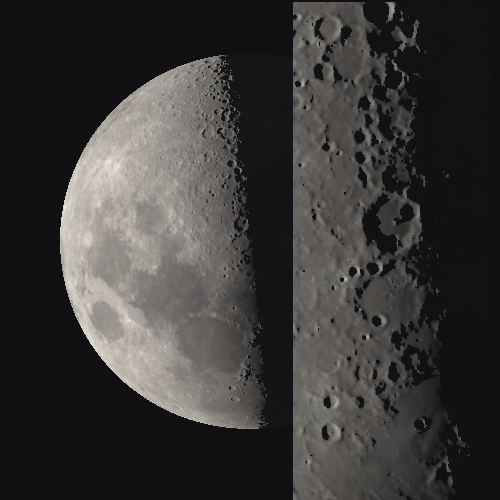 | ||
| First Quarter perigee moon at 22:18 ACDST on January 7. Actual First Quarter is midnight on the 7th and perigee is midnight on the 8th (a 24 hour difference). | First Quarter apogee moon at 23:11 ACST on August 1 at actual First Quarter, apogee is 6 am on the 2nd (an ~7 hour difference). The size difference will be clear in telescopes. | First Quarter Moon at 20:43 ACDST )10:13 UT) on January 7 the inset shows the Lunar X (top) and Lunar V (bottom), the dates and times that the Lunar X can be seen are shown in the table below |


Dates and time Lunar X and V are visible. Typically visible from about 4hours from the starting time, times in colour are daylight saving times.
| Date | UT | AEST | ACST | AWST |
| Feb 5 | 08:13 | 21:13 | 20:43 | 16:13 |
| Apr 5 | 12:43 | 22:43 | 22:17 | 20:43 |
| June 3 | 13:18 | 23:18 | 22:30 | 21:18 |
| Aug 1 | 10:57 | 20:57 | 20:17 | 18:57 |
| Sep 29 | 08:46 | 18:46 | 18:16 | 16:46 |
| Nov 27 | 10:43 | 21:43 | 21:15 | 18:43 |
A year of full Moons showing the variation in size as the moons move from perigee to apogee. I also show the apogee and perigee First Quarter Moons and the dates and times you can see the Lunar X and V. All the moons are shown on the day and time they are full (unless they are below the horizon, in which case the size at astronomical twilight is shown and the time of actual full moon is shown as well), and although this is not the optimal time for size comparisons, you can clearly see the size difference over the year (compare Apr 13 to Nov 5) the original scale for all is 2 degrees of field of view cropped down). Although the field rotation of the Moon makes it less clear, you can also see the effect of libration (January 3 vs May 13)
In 2025 we have two good Perigee Moons in a row (November 5, December 5). However, as you can see the differences are subtle, and it requires a keen eye and good memory to distinguish a perigee "super" Moon from more ordinary moons, the best contrast is with the apogee "mini" moon of April 13, even though this is not a good apogee Moon.
That doesn't mean you shouldn't try though. Daniel Fischer has been able to see the difference, you can read his account and viewing tips here:
http://earthsky.org/space/can-you-discern-supermoons-large-size-with-the-eye-an-observer-says-yes
Photographing them can be more rewarding. You can see images of perigee Moon and apogee Moon pairs from 21 Jan 2019 here and 10 August 2014 here.Tips for photographing them are here.
There is also a nice Total Lunar Eclipse on Monday September 8 in the early morning, so you will have to disturb your sleep to see it.
Labels: apogee, Moon, perigee, public outreach, Yearly Moons
Wednesday, January 31, 2024
2024: From "Mini" Moons to "Super" Moons, a year of full Moons
| | |
| Full Moon January 26, 04:30 ACDST. | Full Moon February 24, 23:30 ACDST (apogee 26th +1d 2h) | Full Moon March 25, 20:43 ACDST FM 17:30 ACDST (apogee 24th -1d 15h) penumbral Lunar eclipse |
 |  |  |
| Full Moon April 24, 19:06 ACST FM9:30 ACST | Full Moon May, 23 23:30 ACST | Full Moon June 22 18:42 ACST FM 10:30 ACST (maximum libration 8:30 ACST) |
 |  |  |
| Full Moon July 21 19:30 ACST. | Full Moon August 20 19:20 ACST (FM 03:30 ACST. Perigee, 21st 14:30 pm) | Full Moon September 18 19:33 ACST (FM 13:00 ACST, Perigee, 18th 22:30 pm -10h) |
 |  |  |
| Full Moon October 17 21:01 ACDST (FM 11:30 ACDST, Perigee, 18th 23:30 ACDST +10h) | Full Moon November 16 21:39 ACDST (FM 7:30 ACDST, Perigee, 14th 21:30 ACDST -1d10h) | Full Moon December 15 22:12 ACST |
 |  | |
| First Quarter Moon June 14 15:00 ACST apogee 23:30 ACST | First Quarter Moon December 9 1:30 ACDST perigee 12th 23:30 ACDST |
A year of full Moons showing the variation in size as the moons move from perigee to apogee. I also show the apogee and Perigee First Quarter Moons. All the moons are shown on the day and time they are full (unless they are below the horizon, in which case the size at astronomical twilight is shown and the time of actual full moon is shown as well), and although this is not the optimal time for size comparisons, you can clearly see the size difference over the year (compare Feb 24 to Sep 18) the original scale for all is 2 degrees of field of view cropped down). Although the field rotation of the Moon makes it less clear, you can also see the effect of libration (June 22)
In 2024 we have two good Perigee Moons in a row (September 18, October 17). However, as you can see the differences are subtle, and it requires a keen eye and good memory to distinguish a perigee "super" Moon from more ordinary moons, the best contrast is with the apogee "mini" moon of February 24, even though this is not a good apogee Moon).
That doesn't mean you shouldn't try though. Daniel Fischer has been able to see the difference, you can read
his account and viewing tips here:
http://earthsky.org/space/can-you-discern-supermoons-large-size-with-the-eye-an-observer-says-yes
Photographing them can be more rewarding. You can see images of perigee Moon and apogee Moon pairs from 21 Jan 2019 here and 10 August 2014 here.Tips for photographing them are here.
There is also a penumbral Lunar Eclipse on 25 March but twilight makes this difficult to see.
Labels: apogee, Moon, perigee, public outreach, Yearly Moons



 Click to read about or order
 Click to read about or order
 Click to read about or order
 Click to read about or order


