Tuesday, July 07, 2026
Thursday July 9 to Thursday July 16
The New Moon is Wednesday July 14. The moon is at perigee, when it is closest to the earth on, the 13th.

Saturn is high above the northern horizon with Mars low in the east. The Pleiades are close to the crescent moon Moon. Saturn is now high enough for telescopic observation, and its rings are widening.
Mars forms a second eye for Taurus the Bull with Aldebaran.
The insets shows the telescopic view of Saturn at this time and the binocular view of the Moon and Pleiades.
Similar views will be seen from the rest of Australia at roughly the equivalent local time (90 minutes before sunrise).

Mars is near the Moon and forms a second "eye' with the bright red star Aldebaran for Taurus the Bull.
The inset shows the binocular view of Mars, Uranus and the Pleiades at this time.
Similar views will be seen from the rest of Australia at roughly the equivalent local time (90 minutes before sunrise).

Jupiter is coming close to the horizon. Venus is closest to the bright star Regulus (Alpha Leonis).
Similar views will be seen from the rest of Australia at roughly the equivalent local time (60 minutes after sunset).

The crescent Moon, the bright star Regulus and Venus form a line. The inset is the telescopic view of Venus at this time.
Similar views will be seen from the rest of Australia at roughly the equivalent local time (60 minutes after sunset).

Mercury is lost in the twilight.
Venus climbs higher in the evening twilight and is now visible when the sky is fully dark. Venus is close to the bright star Regulus (Alpha Leonis).
Mars is climbing in the twilight. Mars is near the Moon and forms a second "eye' with the bright red star Aldebaran for Taurus the Bull.
Jupiter is low above the horizon, setting around civil twilight.
Saturn is climbing higher in the morning sky above Mars.
Star Map via Virtual sky. Use your mouse to scroll around and press 8 when your pointer is in the map to set to the current time.
Cloud cover predictions can be found at SkippySky.
Here is the near-real time satellite view of the clouds (day and night) http://satview.bom.gov.au/
Labels: weekly sky




 Click to read about or order
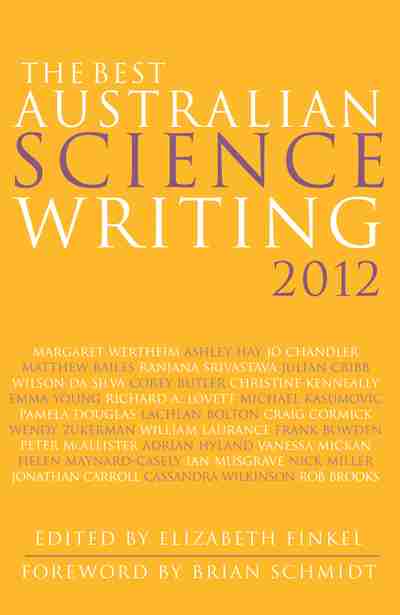 Click to read about or order
 Click to read about or order
 Click to read about or order


