The Last Quarter Moon is Friday December 12. Saturn is high in the north-western sky. Jupiter is visible in the morning sky near the bright star Pollux. Jupiter is rising before midnight. Jupiter is still best in the morning. Geminid meteor shower 14th and 15th. Mercury is visible deep in the twilight near the Moon on the 18th.
The Last Quarter Moon is Friday December 12. The Moon is at apogee, when it is furthest from the Earth, on the 17th.
North-eastern twilight sky on the morning of Saturday, December 13 as seen from Adelaide
at 04:49 ACDST (60 minutes before sunrise, click to embiggen).
Jupiter
is passing through Gemini and is near the bright star Pollux. Jupiter forms a slightly battered line with the bright stars Castor, Pollux and Procyon.
The inset is the telescopic view Jupiter at this time.
Similar views will be seen from the rest of Australia at roughly the equivalent local time (60 minutes before sunrise).
North-western
sky on Saturday, December 13 as seen from Adelaide at 22:11 ACDST (90
minutes after sunset, click to embiggen). Saturn is west of due north.
The inset shows the telescopic view of Saturn at this time.
Similar views will be seen from the rest of Australia at roughly the equivalent local time (90 minutes after sunset).
Eastern sky on Saturday, December 13 as seen from Adelaide at 23:52 ACDST. Jupiter is rising.
Similar views will be seen from the rest of Australia at roughly the equivalent local time.
Northern morning
sky on Sunday, December 14 as seen from Adelaide at 03:13 ACDST, when the Geminid meter shower is at it's highest.
Jupiter forms a line with the bright stars Poolux and Castor. the Geminid meteor shower radiant is just below Castor and is marked with a star burst.
Similar views will be seen from the rest of Australia at roughly the equivalent local time, exact timings at my
Geminid viewing page.Eastern sky on Thursday, December 18 as seen from Adelaide at 5:06 ACDST (45 minutes before sunrise, click to embiggen). Mercury is close to the crescent Moon deep in the twilight.
Similar views will be seen from the rest of Australia at roughly the equivalent local time 45 minutes before sunrise, click to embiggen).

Whole sky on Saturday, December 13 as seen from Adelaide at 22:11 ACDST, 90 minutes after sunset (click
to embiggen).
Saturn is in the northwest.
Bright Canopus and Sirius are rising, along with Orion. The galactic core is setting in the western sky.
The
Southern Cross is low in the Southern sky. The moon is waning and
the fainter clusters and nebula are becoming easier to see.
Elsewhere
in Australia will see a similar view at the equivalent time (90 minutes after sunset).
Mercury is just visible in the twilight. It is near the crescent Moon on the 18th.
Venus is lost in the twilight glow.
Mars is lost in the twilight.
Jupiter climbs in the morning twilight and is now rising just before midnight. Jupiter forms a slightly battered line with the bright stars Castor, Pollux and Procyon.
Saturn is the brightest object in the north-western skies.
Labels: weekly sky
# posted by Ian Musgrave @ 11:09 pm




 Click to read about or order
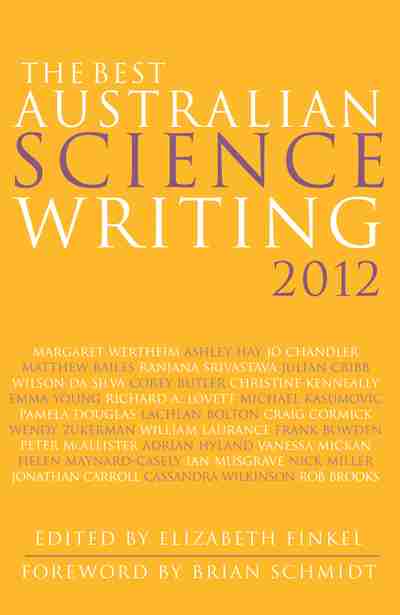 Click to read about or order
 Click to read about or order
 Click to read about or order


