Monday, February 25, 2013
Book Review: How it Began

Chris Impey uses a similar approach in his book "How it Began", only as well as going up from Earth to solar system to the galaxy and beyond, he takes us back in time as well, to where it all began. Doing a good, accessible book on the origin of the Universe is always a hard task, as our ideas on the origin may seem simple but have hidden, lurking complications in them.
By starting with the familiar, Chris sneaks up on these central ideas a step at a time, in an engaging way. As well as the central time travel metaphors, each chapter is top and tailed with the authors imagined viewpoint of this journey. I was a bit less enthusiastic about this device, sometimes it worked well, and sometimes it felt a bit contrived. I suspect this is more to do with how I visualize the same events (one day, Chris, myself and Larry Niven can get together and discuss what would happen to an astronaut on Pluto), but the critical thing is that these bookends didn't distract from the story.
In each section Chris mixes explanation, historical snippets and his own personal experience. As he has a wealth of directly relevant personal experience these episodes enhance the story rather than diverting it (I winced in sympathy at the story of shattered glass astrophotography plates). They are welcome rests on the path to enlightenment.
In a book where you are trying to explain abstruse physical theory, where the scale of the universe beggars our own earthbound experience, metaphors and analogy will inevitably be used. Chris does these devices well, I found one a little strained, but the majority were fresh, clever and very helpful (I really liked the dancer in the white suit with a partner in a dark dress for explaining Doppler wobbles for detecting exoplanets, but the analogy of the shadow of his partners feather boa to explain transits didn't work for me).
The mark of a good book is when you learn something new about a field you thought you had covered, and despite having a reasonable familiarity with most of the material, I learnt a thing or two from this book. I didn't know about the race to measure parallax for example. Even if you are well versed in these areas, Chris's book tells the story in such a refreshing way that it is worth reading to see how he explains it.
Explaining our theories of how the Universe began is always fraught, but Chris does it with aplomb, the steps leading up to string theory, and the shattered hopes that came with it are well described, the various "what caused the Big Bang" ideas are fairly surveyed. One of the things I really liked was the clear explanation of the various versions of "alternative universe" theories, which often leaves people puzzled. In fast moving fields like observing exoplanets, events have caught up with the book, but in a good way. A couple of places I found myself saying "yes, you called it".
Despite the recent advances this book will relevant for many years to come. From Earth to exoplanets, from dark matter to the Big Bang, Chris covers them all with aplomb, as we might expect from someone who teaches cosmology to Buddhist monks.
If you don't have much background in astronomy and want to learn more about the Universe, this book is for you. Even if you have a very good grounding in cosmology, this book is worth a read for the historical perspectives and the personal tales, and the analogies which you can pinch to explain things to your friends.
I give it four and a half out of five Quasars.
Labels: book review, review

Monday, October 24, 2011
Book Review: A More Perfect Heaven
 Portrait of Copernicus, 1580, Toruń Old Town City Hall Image Credit WikiPedia.
I have been a fan of Dava Sobel ever since I first read "Longitude", so I was excited to receive a copy of her latest book "A More Perfect Heaven". Ms Sobel has written quite a bit about the solar system and the social and scientific mileau that existed as we came to understand the our place amidst the myriad worlds, and this latest book extends that work.
In "Galileo's Daughter", we saw Galileo and the development of his work on heliocentrism through the eyes of his daughter, a cloistered nun. This time Ms Sobel looks at Copernicus, the developer of the heliocentric theory that Galileo championed (you can see an animated comparison of the theories here).
This work is a superb treatment of Copernicus the man, and the political and scientific climate that prevailed as he developed his work. You won't find out what exactly an equant is[1], or why it was so important that Copernicus banished it, or why perfect circular motion was an obsession with medieval astronomers[2], but the account of the man himself and the struggle to develop his theory in a time of upheaval is riveting.
 Copernicus's heliocentric system, Image credit WikiPedia
For most people, if you have an image of Copernicus at all, it is as a cloistered monk bent over parchment. Ms Sobel introduces us to a person who is almost the antithesis of this image.
The Copernicus who frantically organised the defence of Allenstein in the face of a near invincible invading army, and yet still found the time to do astronomical observations, was no mere cloistered monk. Copernicus was a complicated man living in complicated times. Ms Sobel paints a compelling picture of him and those times, the intellectual ferment, the politics and duties that took Copernicus away from his astronomical work, and the circle of friends and confidants that commented on and encouraged his astronomy.
Despite encouragement, and entreaties, Copernicus had decided he would not publish his work on heliocentrism. Somehow, The mathematician Rheticus, a Protestant banned from the Catholic lands Copernicus lived in managed to make the dangerous overland journey to Copernicus's home, and managed to stay in the city he should have been expelled from for two years; long enough to convince Copernicus to publish and help him with organization and editing.
We have no knowledge of how this amazing feat was accomplished, in the absence of any historical record, Ms Sobel inserts a fictional interlude where she imagines, in play form, what might have happened. While it is an unusual construction in a work of non-fiction, I think it works, inviting the reader to more fully imagine the world of Copernicus.
After the interlude we return to history, and the frantic rush to the "On the Revolutions of the Heavenly Spheres" into press. Almost everyone with an interest in astronomy will know the story of how the completed manuscript copy of "On the Revolutions.." was pressed into the dying Copernicus hands, Ms Sobel fleshes out that story. Even in these days of electronic compositing and email, proof reading and correcting manuscripts is a painful process, just imagine what it was like when it took days to typeset, print and dry a page before sending the pages hundreds of laborious miles for someone to pore over them.
The reactions to "On the Revolutions...." are treated well (the Catholic Church was possibly the first to experience the Streisand Effect when it listed Copernicus's book in the index of proscribed books). Arthur Koesteler famously described "On the Revolutions" as the book nobody read. Now, I wouldn't trust Kosteler's description as far as I could spit a rat, and Ms Sobel does us a signal favour by introducing a new and wider audience to Owen Gingerich's work showing that in fact it was the book everyone read.
Copernicus's legacy was not just the heliocentric theory, although that was significant enough, but the approach of marrying careful and meticulous observation with detailed theory was the forerunner of the modern scientific method. The Gregorian calendar we use today depended on Copernicus's determination of the length of the mean solar year. Ms Sobel has produced a modern and compelling work which locates Copernicus and his work firmly in the history of the his time, yet makes him understandable in our time.
[1] you will find a brief but understandable explanation of the equant on page 20-21 of the hardcover edition of "A More Perfect Heaven", but the details and implications are not explored. Copernicus's removal of the equant was hailed by his contemporaries as a significant achievement, but you really need to understand the Aristotelian world view to see why this was.
[2] one of the reasons motion had to be uniform and circular in the Aristotelian universe, apart for the idea that circles were perfect, and reflected the perfection of the heavens and the creator, was that any deviation from perfect, circular motion would result in a vacuum, which was not permissible in the Aristotelian universe. See Zero, the Biography of a Dangerous Idea for a fascinating look at this.



 Click to read about or order
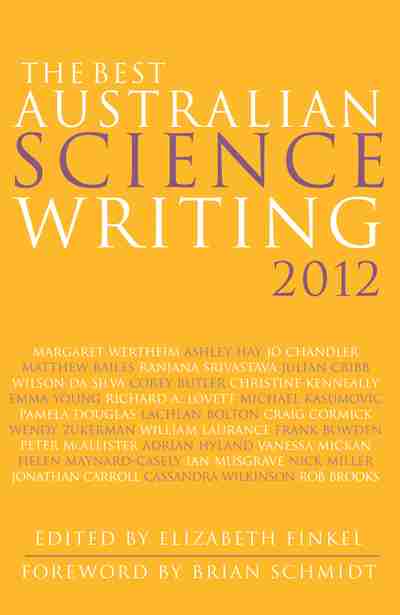 Click to read about or order
 Click to read about or order
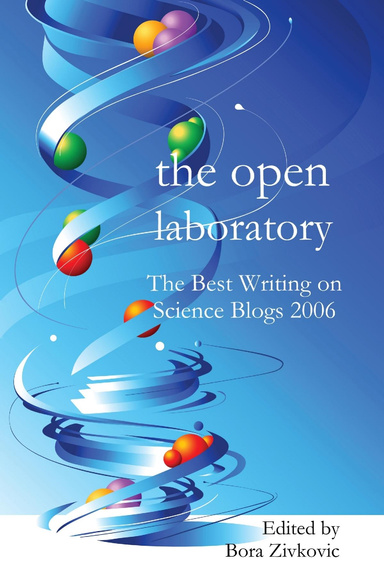 Click to read about or order


