Wednesday, July 05, 2023
Southern Skywatch July 2023 edition is now out!

Similar views will be seen from the rest of Australia at the equivalent local time (90 minutes before sunrise).
The July edition of Southern Skywatch is now up.
The planetary action is now returning to the evening skies, Venus and Mars remain prominent and bright in the evening skies. Mercury returns to the evening twilight later in the month and will offer good viewing opportunities. Saturn climbs higher in the late evening sky, while Jupiter dominates the morning sky.
July 1-7; Venus is closest to Mars on the 1st and remains within 4° for the first week of July. July 3; Full Moon. July 5; Moon at perigee. July 6-7; the waning moon near Saturn in the late evening. July 9-12; Venus 1° from the bright star Regulus, being closest on the 10th. July 10; Last Quarter Moon. July 12; the waning Moon close to Jupiter. July 15, Venus, Regulus and Mars make an attractive lineup. July 17; New Moon. July 18, Venus is at its closest to Regulus, when it is 3.5° away. July 20; apogee Moon. July 21; A nice line-up of Venus, Regulus, Mars and the crescent Moon with Mercury below. July 26; First Quarter Moon. July 28-28; Mercury is very close the Regulus (less than a finger-width). July 30; Southern Delta Aquariid meteor shower.
Mercury returns to the evening sky mid-month and is (just) visible in the nautical twilight from around the 15th. On the 19th Mercury is near the thin crescent Moon. On the 27th and 28th Mercury passes below Venus. From the 28th to 29th Mercury is very close to Regulus..
Venus begins to sink in the evening sky this month but remains visible after astronomical twilight for most of the month. Venus also increases in brilliance and reaches its greatest brilliance on the 8th. When it is a clear crescent being one quarter illuminated. Although it fades slightly after this as its crescent thins and increases in size. it will remain bright for the rest of the month (what’s -4.5 to -4.2) between friends. Venus is a clear crescent shape in telescopes as it’s apparent size increases.
Venus has been coming close to Mars through June, is closest to Mars on the 1st, when it is 3° 33' away. Venus remains within 4° for the first week of July.
Venus has two notable close encounters this month:
On the 15th Venus, regulus and mars make an attractive line up with Venus and mars almost equidistant from Regulus. Venus is within 5° of Regulus from the 8th to the 26th with the closest approach on the 18th, when it is 3.5° away. On the 21st there is a nice line-up of Venus, Regulus, Mars and the crescent Moon with Mercury below.
Earth is at aphelion, when it is furthest from the Sun on the 7th.
Mars although well past opposition, is still easily visible It passes through Leo. On the 1st, and Venus are at their closest. Mars remains within 4° of Venus for the first week of July, while coming closer to Regulus. From the 9th to 12th Mars is around 1° from Regulus, being closest on the 10th.
On the 15th Venus, Regulus and Mars make an attractive line up with Venus and Mars almost equidistant from Regulus. On the 21st there is a nice line-up of Venus, Regulus, Mars and the crescent Moon with Mercury below. Mars is only 3 degrees from the moon at this time.
Jupiter climbs higher in the morning sky; it is now high enough for telescopic observation. On the 12th Jupiter will be 3 degrees from the waning crescent moon.
Saturn continues to climb higher in the evening skies ahead of opposition next month, it is high enough to view comfortably in the late evening, although it remains in the early morning skies. On the 7th, Saturn is near to the waning moon in the late evening skies.Labels: southern skywatch

Thursday, June 01, 2023
Southern Skywatch June 2023 edition is now out!

The June edition of Southern Skywatch is now up.
The planetary action is now now mostly in the morning skies, although Venus and Mars remain prominent and bright in the evening skies and have some nice encounter with the Beehive cluster. The Moon occults Delta Scorpii. Mercury is prominent in the morning twilight below Jupiter at the begining of this month but will be lost to view from mid month. Saturn climbs higher in the morning sky and is now rising before midnight, as Jupiter also climbs higher in the morning sky.
June 1-3; Mars crosses the Beehive cluster. June 3; the bright star delta Scorpius in the head of the scorpion is occulted by the Moon in the early evening just on Nautical twilight. June 4; Full Moon. June 7; Moon at perigee. June 10; the waning moon near Saturn in the morning twilight. June 11; Last Quarter Moon. June 13-14, Venus close to the Beehive cluster. June 14; the waning Moon close to Jupiter. June 18; New Moon. June 21; the crescent Moon forms a line with Venus and Mars. June 22; the crescent Moon is close to Venus in the evening forming a triangle with Mars. June 22; the Earth is at Solstice. June 23; the crescent Moon forms a line with Mars and Venus. June 23; apogee Moon. June 26; First Quarter Moon.
Mercury is still prominent in the morning sky early in the month. It is easily visible above the eastern horizon an hour before sunrise, below Jupiter. As the month wears on Mercury heads towards the horizon and is lost in the twilight.
Venus continues to climb higher in the evening sky this month and now is easily visible from shortly until over an hour after astronomical twilight when the sky is fully dark. Venus is at its greatest distance from the Sun on the 4th but remains high in the evening sky for the rest of the month. Venus also increases in brilliance and goes from a half moon shape to a clear crescent shape in telescopes.
Venus has two notable close encounters this month: From the 13th to 14th, Venus skims past the open cluster M44, the beehive cluster, providing an excellent sight in binoculars.
Venus comes closer to Mars, but never quite catches up to it. On the 22nd, Venus Mars and the crescent moon form an attractive triangle. On the 21st and 23rd the trio form a line.
Earth is at Solstice on the Thursday 22nd, when the day is shortest.
Mars although well past opposition, is still easily visible It passes through Cancer and enters Leo late in the Month. On the 1st, Mars can be found on the outskirts of the Beehive cluster M44. And on the 2nd and 3rd Mars is in the heart of the beehive, a great binocular and telescope vista (also good in dark sky locations)
On the 22nd, Venus Mars and the crescent moon form an attractive triangle.
Jupiter climbs higher in the morning sky, at the beginning of the month bright Mercury is below it, but Mercury is less prominent as the month progresses. On the 14th Jupiter will be 5 degrees from the waning crescent moon.
Saturn continues to climb higher in the morning skies and becomes visible in the late evening, although it remains best in the morning skies. On the 10th, Saturn is near to the waning Moon in the morning skies.Labels: southern skywatch
Wednesday, May 03, 2023
Southern Skywatch May 2023 edition is now out!
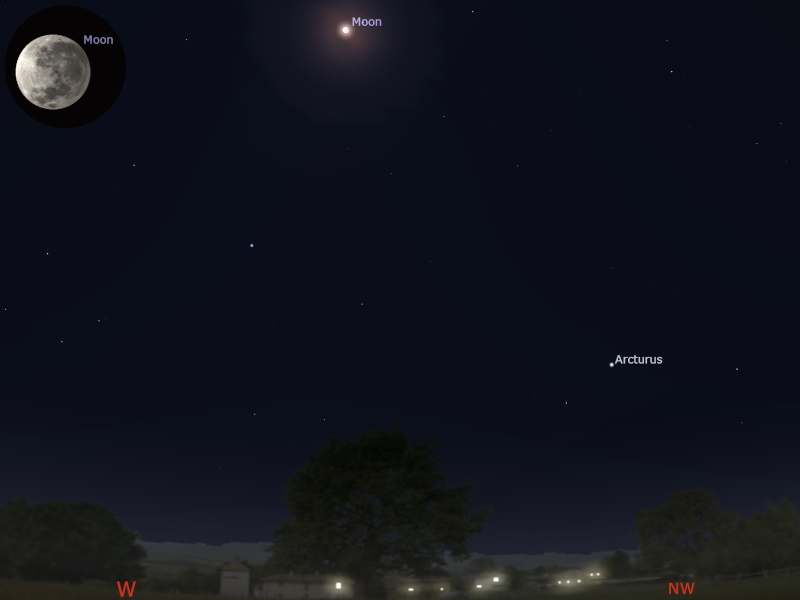 Morning
sky on Saturday May 6 looking west as seen from
Adelaide at 02:52 ACST. Similar views
will be seen elsewhere in Australia at the equivalent local time. (click
to embiggen). Note the subtle darkening of the Moon in the inset.
Morning
sky on Saturday May 6 looking west as seen from
Adelaide at 02:52 ACST. Similar views
will be seen elsewhere in Australia at the equivalent local time. (click
to embiggen). Note the subtle darkening of the Moon in the inset.
The May edition of Southern Skywatch is now up.
The planetary action is now shifting to the morning skies, although Venus and Mars are prominent and bright in the evening skies. Mercury returns to the morning twilight but will be good viewing this month. Saturn climbs higher in the morning sky. Jupiter climbs higher the morning twilight late in the month. Eta Aquariid meteor shower and penumbral eclipse of the Moon.
May 6; Full Moon (penumbral eclipse) and eta Aquariid meteor shower in the morning. May 8-10, Venus close to open cluster M35. May 11; Moon at perigee. May 12; Last Quarter Moon. May 14; the crescent moon near Saturn in the morning twilight. May 16 - 17; Venus is very close to the star epsilon Geminorum. May 18; Mercury, the thin crescent Moon and Jupiter from a triangle. May 20; New Moon. May 23; the crescent Moon is close to Venus in the evening. May 24; the crescent Moon forms a triangle with Venus and Mars. May 25; the Moon is near Mars. May 26; apogee Moon. May 28; First Quarter Moon. May 31; Mars is on the outskirts of the Beehive cluster.
Mercury enters the morning sky and is best seen from mid-month. On the 18th Mercury, the thin crescent Moon and Jupiter from a triangle. On the 29th it is at its furthest from the sun, and will be easy to see above the eastern horizon an hour before sunrise, below Jupiter.
Venus climbs yet higher in the evening sky this month; the low angle of the ecliptic means it never gets really high but it is now prominent at astronomical twilight, when the sky is full dark. Venus has two close encounters this month. Venus moves from Taurus into Gemini this month. From the 9th to 10th Venus is close to the open cluster M35, an excellent sight in binoculars. On the 16th and 17th Venus is very close to the star epsilon Geminorum. On the 23rd Venus will be just 3° from the crescent moon, making a nice binocular sight. On the 30th Venus is only 20 arc minutes from the double star Kappa Geminorum. Venus currently looks like a half Moon.
Mars is well past opposition this Month but is easily visible, Mars is shrinking in telescopic view, Mars now leaves Gemini and enters Cancer, on the 31st Mars is on the outskirts of the Beehive cluster M44, a very nice binocular sight. On the 24th Mars, Venus and the waxing moon form a triangle.
Jupiter climbs higher the morning twilight but will be best seen from around mid-month. On the 18th Mercury, the thin crescent Moon and Jupiter from a triangle.
Saturn climbs higher in the morning skies and is now readily visible an hour and a half before sunrise. On the 14th Saturn is 3 degrees from crescent moon in the morning skies. On the 28th the maximum amount of shadow will be cast on Saturn’s rings, giving them a 3D appearance.
Labels: southern skywatch
Monday, April 03, 2023
Southern Skywatch April 2023 edition is now out!

On 20th April the Sun will be eclipsed at the very edge of Australia,
the path of totality will pass over the northwest cape in WA.
The rest of Australia sees a partial eclipse, with WA having the best
view, Broome and Geraldton see >80% of the Sun covered: Darwin 80%,
Perth 71%, Cairns 50%M Townsville 36% and Adelaide 21%. the partial
eclipse begins around 10 am local time WA, 12 pm central states and 1 pm
Eastern states.
The April edition of Southern Skywatch is now up.
Daylight sayings ends. The planetary action is still largely in the evening skies, with Venus and Mars prominent and bright. Mercury enters the evening twilight but will be almost impossible to see. Saturn climbs higher in the morning sky. Jupiter enters the morning twilight late in the month. Total Solar eclipse in WA.
April 1-2, Mars close to open cluster M35. April 10-12; Venus and Pleiades cluster close. April 6; Full Moon. April 13; Last Quarter Moon. April 16-17; the thin crescent moon near Saturn in the morning twilight. April 20; Moon at perigee. April 20; New Moon, solar eclipse. April 23; the crescent Moon is very close to Venus in the twilight. April 26; the Moon is close to Mars. April 28; First Quarter Moon. April 28; apogee Moon.
Mercury enters the evening sky but remains deep in the twilight. On the 12th it is at its furthest from the sun, but will be difficult to see above the western horizon even if you have a level, unobstructed horizon.
Venus climbs yet higher in the evening sky this month; the low angle of the ecliptic means it never gets really high although it is prominent at nautical twilight, Venus is also (just) visible when the sky is full dark. Venus has two close encounters this month. From the 10th to the 12th Venus and the iconic Pleiades cluster are close, good in binoculars, difficult telescopically, the days leading up to and shortly after the close approach will be nice as well. From the 15th to 19th Venus will be below the Hyades. On the 23rd Venus will be just 3° from the crescent moon, making a nice binocular sight. But the 30th Venus will be between Elnath and Zeta Taurii. Venus currently looks like a gibbous Moon.
Mars is well past opposition this Month but is still prominent, Mars is shrinking in telescopic view and is less attractive as a target. At the start of the Month Mars is close to the open cluster M35, an excellent sight in binoculars. After being so long in Taurus, Mars now enters Gemini and is close to Epsilon Geminorum on the 14th.
On the 26th Mars is around 5° from the waxing moon (very obvious as the brightest object near the moon), mid power binocular fields will just fit the pair in.Jupiter is lost to view for most of the month, entering the morning twilight late in the month. It will not be easy to see until May.
Saturn climbs higher in the morning skies and is now readily visible an hour before sunrise. On the 16th to 17th Saturn is bracketed by the thin cresent moon low in the morning skies.
Labels: southern skywatch
Monday, February 27, 2023
Southern Skywatch March 2023 edition is now out!

Similar views will be seen from the rest of Australia at the equivalent local time (60 minutes after sunset).
The March edition of Southern Skywatch is now up.
This month the planetary action is still largely in the evening skies, with Venus and Mars prominent and bright, Jupiter is lost in the twilight, mid month Saturn enters the morning twilight twilight and is close to Mercury early in the month.
March 2; Venus and Jupiter at their closest. March 3; Mercury and Saturn close low in the twilight. March 4; apogee Moon. March 7; Full Moon. March 15; Last Quarter Moon. March 20; the thin crescent moon near Saturn in the morning twilight. March 20; Moon at perigee. March 22; New Moon. March 24; the crescent Moon is very close to Venus in the twilight. March 29; First Quarter Moon. March 28; the Moon is close to Mars. March 30, Mars close to open cluster M35. March 31; Venus is just 1.5 degrees from Uranus.
Mercury falls back towards the eastern horizon and is lost to view early in the month, reappearing in the evening twilight late this month. On the 3rd Saturn is about 1 degree from Mercury deep in the twilight. You will need a level, unobstructed horizon and binoculars to see the pair at their best.
Venus climbs yet higher in the evening sky this month; the low angle of the ecliptic means it never gets really high although it is prominent at nautical twilight by the month Venus is (just) visible when the sky is full dark. Venus has three close encounters this month. The stand out is on the 2nd when Venus and Jupiter are just 0.5 apart, visible well before nautical twilight, difficult telescopically. On the 24th Venus will be just 1° from the crescent moon, making a fine binocular sight. Venus currently looks like a gibbous Moon. On the 31st Venus is just 1.5 degrees from Uranus.
Earth is at equinox on Tuesday, 21 March. At this time day and night are roughly equal in duration.
Mars is making a line with Aldebaran and the Beta Taurii. At the beginning of the Month Mars also forms a triangle with Beta and Zeta Taurii (the tips of the horns). Mars is shrinking in telescopic view but is still a worthwhile telescopic object this month. By the end of the Month Mars is close to the open cluster M35, an excellent sight in binoculars. On the 28th Mars is around 4° from the waxing moon (very obvious as the brightest object near the moon), mid power binocular fields will just fit the pair in.
Jupiter is lowering in the north-western evening sky. Venus and Jupiter have been approaching each other all February, and on the 2nd on March they are just 0.5° apart. Jupiter continues to sink towards the horizon and is lost to view around mid month.
Saturn enters the morning skies but is only really visible from mid-March. On the 3rd Saturn is about 1 degree from Mercury deep in the twilight. You will need a level, unobstructed horizon and binoculars to see the pair at their best. On the 20th Saturn is close to the thin crescent moon low in the morning twilight.
Labels: southern skywatch
Thursday, February 02, 2023
Southern Skywatch February 2023 edition is now out!
 Evening
sky showing the track of comet C/2022 E3 from Monday February 6 to
Tuesday February 14 as seen from Adelaide at 21:56 ACDST, 90 minutes
after sunset (click to embiggen). The comet is easily visible in
binoculars and can be located by sweeping up from the bright star
Capella above the northern horizon towards Mars and the star Aldebaran.
For more detailed carts and spotters maps see my C/2022 E3 page.
Evening
sky showing the track of comet C/2022 E3 from Monday February 6 to
Tuesday February 14 as seen from Adelaide at 21:56 ACDST, 90 minutes
after sunset (click to embiggen). The comet is easily visible in
binoculars and can be located by sweeping up from the bright star
Capella above the northern horizon towards Mars and the star Aldebaran.
For more detailed carts and spotters maps see my C/2022 E3 page.
The February edition of Southern Skywatch
is now up.
This month the planetary action is largely in the evening skies, with Venus. Jupiter and Mars prominent and bright, Saturn is lost in the twilight and Mercury begins to leave morning sky. February is also when the long-awaited comet C/2022 E3 enters the evening sky.
February 4; apogee Moon. February 6; Full Moon. February 5-6; comet C/2022 E3 becomes visible in Australian skies. February 14; Last Quarter Moon. February 19; the thin crescent moon near Mercury in the morning sky. February 19; Moon at perigee. February 20; New Moon. February 22; the crescent Moon is very close to Venus in the twilight. February 22-23; Jupiter, the crescent Moon and Venus make a nice line-up. February 26; the crescent Moon is close to Jupiter. February 29; First Quarter Moon. February 28; the Moon is close to Mars, Venus and Jupiter close.
Mercury
begins to fall back towards the eastern horizon sky this month. On the 19th the thin crescent moon is less than 4° above Mercury. You will need a level, unobstructed horizon to see the pair at their best. You may need binoculars to clearly see the pair.
On the 1st Mercury is just one and a half hand-spans from from the eastern horizon an hour before sunrise. On the 15th Mercury is just under one and a half hand-spans from from the eastern horizon an hour before sunrise. By the 28th Mercury is just one and a half hand-spans from from the eastern horizon half an hour before sunrise.
Venus climbs higher in the evening sky this month; the low angle of the ecliptic means it never gets really high although it is prominent at nautical twilight by the end of the month Venus has three close encounters this month. On the 15th Venus and Neptune are just 10 arc-minutes apart, but this will be almost impossible to observe. On the 22nd Venus will be just 1° from the crescent moon, making a fine binocular sight. Venus currently looks like a gibbous Moon. Venus and Jupiter have been approaching each other all month, and on the 28th are just 2° apart and will be even closer in March, they will make a fine binocular pair but telescopic observation will be tricky.
Mars is well past opposition this Month but is still prominent, making a triangle with Aldebaran and the Pleiades. As the month progress mars fades more as it moves down the “horns” of Taurus the Bull. By the end of the Month Mars forms a triangle with Beta and Zeta Taurii (the tips of the horns). Mars is shrinking in telescopic view but is still a worthwhile telescopic object this month. On the 28th Mars is around 3° from the waxing moon (very obvious as the brightest object near the moon), mid power binocular fields will fit the pair in.
Jupiter is lowering in the north-western evening sky. It is a difficult telescopic object best captured just before astronomical twilight early in the month. On the 22nd and the 23rd Jupiter the crescent Moon, and Venus make a pleasing line up in the twilight. Venus and Jupiter have been approaching each other all month, and on the 28th are just 2° apart and will be even closer in March.
Saturn is lost in the twilight and will enter the morning skies mid-March.
Labels: southern skywatch
Friday, January 20, 2023
Southern Skywatch January 2023 edition is now out!
 Evening
sky on Monday, January 23 as seen from Adelaide at 21:16
ACDST, (45 minutes after sunset, click
to embiggen). Venus is low above the horizon close to Saturn with the
thin crescent Moon nearby.You will need a low, unobstructed horizon to
see Venus clearly. You may need binoculars to glimpse Saturn.
Evening
sky on Monday, January 23 as seen from Adelaide at 21:16
ACDST, (45 minutes after sunset, click
to embiggen). Venus is low above the horizon close to Saturn with the
thin crescent Moon nearby.You will need a low, unobstructed horizon to
see Venus clearly. You may need binoculars to glimpse Saturn.
The January edition of Southern Skywatch
is now up.
This month Venus, Saturn, Jupiter and Mars grace the evening sky. Saturn is soon lost to view and Mercury is visible in the morning skies.
January 3; the Moon is close to Mars. January 7; Full Moon. January 5; Earth at perihelion. January 8; apogee Moon. January 15; Last Quarter Moon. January 21; the thin crescent moon near Mercury in the morning sky. January 22; New Moon. January 22; Moon at perigee. January 23; the crescent Moon is close to Saturn and Venus low in the twilight. January 26; the crescent Moon is close to Jupiter. January 29; First Quarter Moon. January 31; the Moon is close to Mars again.
Mercury is in the morning sky, and is readily visible in the eastern morning twilight from about mid month. Mercury is at its furthest from the Sun on the 30th, when it is highest above the horizon. On the 20th and then the 21st the thin crescent Moon is near Mercury.
Venus Venus is in the western twilight and is visible an hour after sunset by the end of the month. Saturn is above Venus and comes closer towards the end of the month. On the 22nd and 23th Venus is less than a finger-width from Saturn, on the 23rd the pair are joined by the thin crescent Moon. You will probably need binoculars to see Saturn, and a level, unobstructed horizon the see Venus at it's best.
Earth is at perihelion on 5 January when it is closest to the Sun.
Mars spends January forming a triangle with the bright red star Aldebaran and the beautiful Pleiades star cluster. While Mars continues to dim after opposition last month, it remains one of the brightest objects in the sky and easily recognizable. On the 3rd and 31st Mars is close to the waxing Moon.
Jupiter is lowering into the western evening sky, it is still easily recognizable as the brightest object in the early evening sky (after Venus sets in the twilight). On the 26th Jupiter is near the crescent Moon.
Saturn is low in the evening twilight then is lost to view in late January. During the month Saturn comes closer to Venus, and on the 22d and 23rd the pair are less than a finger-width apart. On the 23rd the thin crescent Moon joins the pair. You will need binoculars to see Saturn and a level, unobstructed horizon will be needed to see the pair at their best.
Labels: southern skywatch
Monday, December 12, 2022
Southern Skywatch December 2022 edition is now out!

Evening sky on Thursday December 8 as seen from Adelaide at 22:06 ACDST pm ACDST(90 minutes after sunset). Mars is at opposition, when is at its biggest and brightest as seen from Earth. The Full Moon is just below. The inset is the telescopic view at this time. Mars is below the bright red star Aldebaran and the distinctive "V" shape of the Hyades cluster. It is also close to the iconic constellation of Orion with it's distinctive belt and Mars, Aldebaran and the red star Betelgeuse form a triangle.
Similar views will be seen from the rest of Australia at the equivalent local time (90 minutes after sunset).
The December edition of Southern Skywatch is now up.
This month the planetary action remains mostly in the evening skies, with 3 bright planets visible in the evening. Venus and Mercury climb higher in the evening skies but remain in the twilight. Opposition of Mars. The Geminid meteor Shower is impacted by the waning Moon.
December 1; First Quarter Moon. December 2; the Moon is close to Jupiter. December 8; the Full Moon close to Mars. December 8; Mars at opposition. December 12; apogee Moon. Morning December 15; Geminid meteor shower peaks. December 16; Last Quarter Moon. December 22; Earth at Solstice. December 23; New Moon. December 24; Moon at perigee. December 24; the thin crescent moon forms a triangle with the Mercury and Venus. December 26; the crescent Moon is close to Saturn.December 28th-30; Mercury and Venus are less than 2° apart. December 29; the crescent Moon is close to Jupiter again. December 30; "Blue" First Quarter Moon.
Mercury climbs higher in the evening sky this month, the low angle of the ecliptic means it never gets really although it gets out of the worst of the twilight glow into nautical twilight. In the first week of the moth you will need a clear, level horizon like the ocean and binoculars to see it there after it is easier. Mercury is at its highest on the 22nd. Venus is below Mercury for most of the Month. On the 24th the thin crescent moon form a triangle with the pair (look around 45 minutes after sunset) and on the 28th to 30th Mercury and Venus are less than 2° apart.
Venus climbs higher in the evening sky this month, as with Mercury, the low angle of the ecliptic means it never gets really high although it gets out of the worst of the twilight glow. Venus is below Mercury for most of the Month, and shares its encounter with the Moon. On the 28th to 30th Mercury and Venus are less than 2° apart.
Earth is at solstice on Thursday the 22nd, when the day is longest.Mars is at opposition this Month when it is biggest and brightest as seen from Earth. Mars is in the readily unrecognizable constellation of Taurus the Bull. At opposition Mars is below the bright red star Aldebaran and the distinctive "V" shape of the Hyades cluster. It is also close to the iconic constellation of Orion with it's distinctive belt and Mars, Aldebaran and the red star Betelgeuse form a triangle. Mars will head towards the beautiful cluster the Pleiades during December ad the first half of January, then moves aback down the Horns of the Bull. Mars is now visible all night.
On the 8th Mars is at opposition around 4° from the full moon (very obvious as the brightest object near the moon), mid power binocular fields will just fit the pair in. Unlike Jupiter and Saturn, Mars's increases and decreases in size substantially over the weeks, at opposition it is 17.06 arc seconds in diameter, even modest amateur telescopes should see surface makings (not in great detail though). By the end of the month mars has shrunk to 15 arc seconds, much harder to resolve in modest instruments. This is the best opposition until 2033.
Jupiter rises before the sky is fully dark and is lowering in the north-western evening sky. It is an excellent telescopic object in the early to late evening. Jupiter was at opposition, when it is biggest and brightest as seen from Earth on September the 27th. Jupiter is visible the whole evening setting after midnight.
On the 2nd Jupiter below the waxing Moon, and then again on the 29th Jupiter is 1° from the crescent moon, fitting into the field of view of mid-range binoculars and wide field telescope eye pieces.Saturn is visible in the early evening sky setting just around 11 pm in the early part of the month and around 9 pm by the end of the month. Saturn was at opposition on the 15th of August and is visible above the western sky when the sky is fully dark. Saturn will be high enough for good telescopic observation in the early evening when the sky is full dark. Saturn forms a line with delta and gamma Capricorn. On December 26; the crescent Moon is close to Saturn.
Labels: southern skywatch
Monday, October 31, 2022
Southern Skywatch November 2022 edition is now out!

The November edition of Southern Skywatch is now up.
This month the planetary action remains mostly in the evening skies, with 3 bright planets visible in the evening. Venus and Mercury return to the evening skies towards the end of the month, low in the taillight. The Leonid meteor Shower is washed out by the bright Moon. Twilight total Lunar eclipse.
Moon at perigee October 30. November the 1st will be a perigee First Quarter Moon. November 1-2; the Moon is close to Saturn. November 4-5; the Moon close to Jupiter. November 8; Full Moon (twilight total eclipse). November 11; Mars is close to the waning Moon, Mars and Beta Taurii (Elnath) form a triangle. November 14; apogee Moon. November 16; Last Quarter Moon. Morning November 19; Leonid meteor shower peaks. November 23; New Moon. Moon at perigee November 26. November 29; the crescent Moon is close to Saturn again.
Mercury returns to the evening sky this month, but never really makes it out of the twilight glow until late in the month, next month it will be excellent. On the 30th Mercury is just under a hand-span above the eastern horizon 30 minutes after sunset, just above Venus. You will need a clear, unobstructed horizon like the desert or ocean and you may need binoculars to see them.
Venus returns to the evening sky this month, but never really makes it out of the twilight glow until late in the month, next month it will be excellent. On the 30th Venus is just under a three finger-widths above the eastern horizon 30 minutes after sunset, just below mercury. You will need a clear, unobstructed horizon like the desert or ocean and you may need binoculars to see them.
Mars is becoming brighter as it nears opposition, it starts the Month between Beta 9Elnath and Zeta Taurii (the tips of the horns) then reverses direction and climbs the “horns” of Taurus the Bull, towards the Hyades and Red Aldebaran. Mars is now rising before midnight but remains best seen in the morning skies. On the 11th Mars is around 3° from the waning moon, forming a triangle with Elnath (beta Taurii), mid power binocular fields will fit the trio in.
Jupiter rises before the sky is fully dark and climbs higher in the evening sky and is an excellent telescopic object in the early evening to early morning. Jupiter was at opposition, when it is biggest and brightest as seen from Earth on September the 27th. Jupiter is visible the whole night setting just before e astronomical twilight. On the 4th and 5th Jupiter is just above, and then below the waxing Moon.
Saturn is visible all evening long setting just after midnight. Saturn was at opposition on the 15th of August and is visible high above the north-western sky when the sky is fully dark. Saturn will be high enough for good telescopic observation in the evening and very early morning. Saturn forms a line with delta and gamma Capricorn, and is close to iota capricornii at the beginning of the month. On the 1st and 2nd the First Quarter and waxing Moon is close to Saturn. On November 29; the crescent Moon is close to Saturn again. Nov 1,9, 17 and 25 sees Titan close to Saturn.
Moon: perigee October 30 (November the 1st will be a perigee First Quarter Moon) and November 26. Apogee November 14
Labels: southern skywatch
Wednesday, October 05, 2022
Southern Skywatch October 2022 edition is now out!
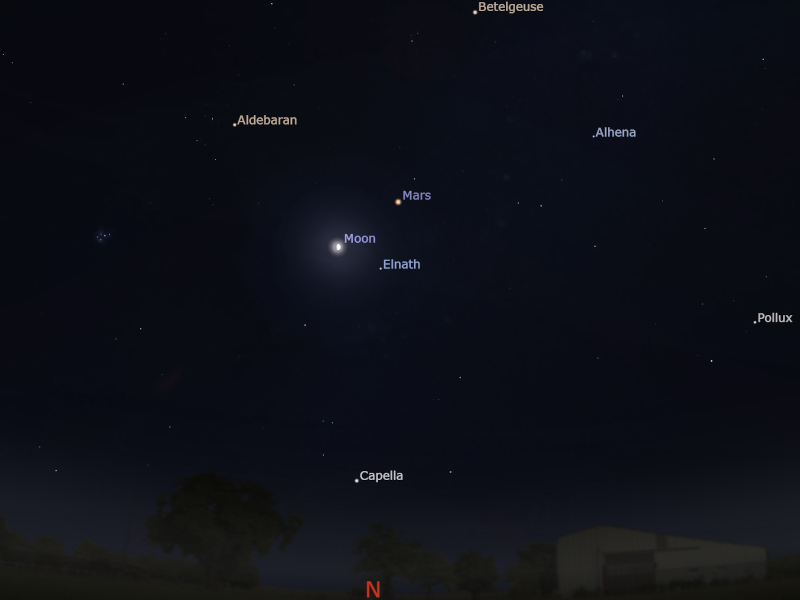
Similar views will be seen elsewhere in Australia at the equivalent local time (90 minutes before sunrise), click to embiggen
The October edition of Southern Skywatch
is now up (sorry about another delay, travel and sickness). The planetary action is moving back to the evening skies, Jupiter is just past opposition and Saturn is still excellent. Mercury and Venus are is lost to view this month. Saturn, Jupiter and Mars are still visible in the morning skies, though Saturn is progressively harder to see.
October 3; First Quarter Moon. October 5; the Moon is close to Saturn. Moon at perigee October 5. October 8-9; the Moon close to Jupiter. October 10; Full Moon. October 15; Mars is close to the waning Moon, Mars and Beta Taruii (Elnath) form a triangle. Apogee; October 17. October 18; Last Quarter Moon. Mornings of the 21st to 23rd; Orionid Meteor Shower. October 25; New Moon. Moon at perigee October 30 (November the 1st will be a perigee First Quarter Moon).
Mercury returns to the morning sky this month, but never really makes it out of the twilight glow.
Venus is lost in the twilight.
Mars is becoming brighter as it nears opposition, it is traveling down the “horns” of Taurus the Bull, away from the Hyades and Red Aldebaran and by the end of the Month will be between Beta and Zeta Tauri (the tips of the horns). On October 15th, the waning Moon, Mars and Beta Tarui (Elnath) form a triangle.
Jupiter rises shortly before the sky is fully dark and climbs higher in the evening sky and is an excellent telescopic object in the mid evening to early morning. Jupiter was at opposition, when it was biggest and brightest as seen from Earth on September the 27th. Jupiter is visible the whole night long. On the 8th and 9th Jupiter is just above, and then below the waxing Moon.
Saturn is now visible all evening long setting in the Early morning. Saturn was at opposition on the 15th of August and is visible high above the north-eastern sky when the sky is fully dark. Saturn will be high enough for good telescopic observation in the evening and very early morning. Saturn forms a line with delta and gamma Capricorn, coming close to iota Capricornii by the end of the month. On the 5th the waxing Moon is close to Saturn. Oct 9, 17 and 24 sees Titan close to Saturn.
Moon: perigee October 5 and 30 (November the 1st will be a perigee First Quarter Moon). Apogee October 17
Labels: southern skywatch
Sunday, September 04, 2022
Southern Skywatch September 2022 edition is now out!
 Morning sky on Saturday, September 3 as seen from Adelaide at 05:08 ACST (90 minutes before sunrise).
Mars is in between the Pleiades and the bright red star Aldebaran.
Similar views will be seen from the rest of Australia at the equivalent local time (90 minutes before sunrise. click to embiggen).
The September edition of Southern Skywatch
is now up (sorry about the delay yet again, life happened once more). The planetary action is moving back to the evening skies, Jupiter is at opposition and Saturn is just past opposition. Mercury is still prominent in the first half of the month. Venus is lost to view this month. Saturn, Jupiter and Mars are still visible in the morning skies, though Saturn is progressively harder to see.
September 1-3; Mars between Pleiades and the red star Aldebaran, forming a second eye for Taurus the Bull. September 4; First Quarter Moon. September 8; perigee Moon. September 8; Saturn and waxing Moon close. September 11; Full Moon. September 11; the Full Moon close to Jupiter (2° away). September 18; Last Quarter Moon. September 17; Mars close to waning moon. September 20; apogee Moon. September 23; Earth at Equinox. September 26; New Moon. September 27; Jupiter at opposition, when it is biggest and brightest as seen from Earth.
Mercury is high(ish) in evening sky, and remains high in the first half of the month then rapidly heads towards the horizon and is soon lost to view. It is low above western horizon at astronomical twilight, and hour and a half after sunset at after sunset when the sky is fully dark in the first week of the month and gets progressively lower. By mid-month it is best seen an hour after sunset (nautical twilight and is soon lost in the sunset glow after this, returning to the morning sky late in the month.
Venus is lost in the twilight.
Mars is becoming brighter in the morning sky as it nears opposition. On the 1st to 3rd Mars passes between the Pleiades and Hyades, an excellent morning sight with Mars forming a second eye for Taurus the Bull with the red star Aldebaran. By the 13th Mars has left Aldebaran behind. On September 17th, Mars is under 5 ° from the waning Moon. The pair just seen together in binoculars.
Jupiter rises shortly after the sky is fully dark and climbs higher in the evening sky and is an excellent telescopic object in the late evening early morning. Jupiter is at opposition, when it is biggest and brightest as seen from Earth on the 27th. At this time, it is visible the whole night long. On the 11th Jupiter rises just below the Full Moon, with the pair in the same binocular field and Jupiter only 2° away.
Saturn is now visible all evening long setting in the Ealy morning. Saturn was at opposition on the 15th of August and is visible high above the northeastern sky when the sky is fully dark. Saturn will be high enough for good telescopic observation in the mid evening and early morning. Saturn forms a very shallow triangle with delta and gamma Capricorn, becoming more elongated as the month wears on. Sep 6 and 17 sees Titan close to Saturn.
On the 8th (morning 19th) the waxing Moon is close to Saturn.
Moon: September 8; perigee Moon. and September 20; apogee Moon
Labels: southern skywatch
Wednesday, August 10, 2022
Southern Skywatch August 2022 edition is now out!

The insets are the telescopic views of Saturn and Jupiter at the same magnification at this time.
Similar views will be
seen from the rest of Australia at the equivalent local time.
The August edition of Southern Skywatch
is now up (sorry about the delay, life happened). The planetary action is in the morning and evening skies with four bright
planets, Saturn, Jupiter, Mars, Venus, and Mercury in the morning sky. Saturn is at opposition, when it is biggest and brightest as seen from Earth, Jupiter clims higher in the evening sky and Mercury is at its best in the evening this month. The asteroid Vesta also reaches opposition and unaided eye brightness.
August 1-3; Mars and Uranus less than 2 degrees apart (in same binocular field). August 4; Mercury and bright star Regulus close. August 5; First Quarter Moon. August 11; perigee Moon. August 12; Full Moon. August 12; Saturn and Full Moon close. August 15; Saturn at opposition, when it is biggest and brightest as seen from Earth. August 15; the waning Moon close to Jupiter (1 degree). August 19; Last Quarter Moon. August 20; Mars close to waning moon. August 23; apogee Moon. August 23; Asteroid Vesta at opposition. August 26; the thin crescent Moon is beside Venus low in the twilight. August 27; New Moon. August 29; Mercury close to thin crescent Moon in evening twilight. August 30-31; Mars between Pleiades and the red star Aldebaran.
Mercury is climbing higher in evening sky, and is at its best this month and until mid-September. It is low in the twilight half an hour after sunset in the first week of the month and get progressively higher. On August 4 it is close the bright star Regulus, It is furthest from the Sun on the 27th when Mercury is visible well after dark has truly fallen On August 29-30 the thin crescent Moon and Mercury are moderately close.
Venus continues to sink towards the horizon and by the end of the month Venus is lost in the twilight glow.
On the 26th Venus and the thin crescent Moon are close.
Mars is becoming brighter as it nears opposition, it is in an area devoid of bright stars so is readily identifiable. On August 22, Mars is 3° from the crescent Moon. The pair easily seen together in binoculars. On the 1 to 3rdst Mars and Uranus easily visible together in binoculars (closes on 1 August). On August 20th , Mars is 5 ° from the waning Moon. The pair just seen together in binoculars. From the 20th on Mars passes between the Pleiades and Hyades, an excellent morning sight, on the 30-31st Mars is directly between the Pleiades and the bright red star Aldebaran.
Jupiter climbs higher in the evening sky and is an good telescopic object in the late evening sky, although still best telescopically in the morning. On the 15th Jupiter is close to the waning Moon, with the pair in the same binocular field and Jupiter only 1° away.
Saturn is climbing higher in the evening sky but remains seen in the morning skies. Saturn is at opposition on the 15th, and is visible the whole night. Saturn will be high enough for good telescopic observation in the evening and early morning. Saturn forms a shallow triangle with delta and gamma Capricorn, becoming more elongated as the month wears on. On the 12th (morning 13th) the Full Moon is close to Saturn.
Moon: August 11; perigee Moon and August 26; apogee Moon
Labels: southern skywatch
Wednesday, June 29, 2022
Southern Skywatch July 2022 edition is now out!

Similar
views will be seen elsewhere in Australia at the equivalent local time
(90 minutes before sunrise), click to embiggen.
The June edition of Southern Skywatch
is now up. The planetary action is in the morning sky with The planetary action is mostly in the morning sky with five bright planets, Saturn, Jupiter, Mars, Venus, and Mercury in the morning sky at the beginning of the month, then four for the rest of the month. Saturn also appears in the evening sky, followed by Jupiter and Mercury later in the month. Earth is aphelion, and the Southern Delta Aquarids meteor shower.
July 1; Venus forms a second eye for Taurus the Bull. July 7; First Quarter Moon. July 13; perigee Moon. July 14; Full Moon (best Perigee Moon this year). July 16, Mars near the variable star Mira, which should be at maximum. July 15 (morning 16); Saturn and waning Moon close. July 19; the waning Moon near Jupiter. July 21; Last Quarter Moon. July 22; Mars close to crescent moon. July 26; the thin crescent Moon is beside Venus. July 26; apogee Moon. July 29; New Moon. July 29-30, Southern Delta Aquariids meteor shower. July 30; Mercury close to thin crescent Moon in evening twilight. July 31; Mars and Uranus 2 degrees apart (in same binocular field).
Mercury
is rapidly sinking towards the morning horizon and is really only visible for the first week. It returns to the evening sky later in the month. It is low in the twilight half an hour after sunset in the last week of the month. On July 30 the thin crescent Moon and Mercury are close in the twilight.
Venus starts the month close to Aldebaran, forming a second eye for Taurus the Bull. Venus continues to sink towards the horizon but is readily visible from nautical twilight until dawn.
On the 26th Venus and the thin crescent Moon are close.
Earth is at aphelion on Monday the 4th, when it is furthest from the sun.
Mars is becoming brighter as it nears opposition, it is in an area devoid of bright stars so is readily identifiable. On July 22, Mars is 3° from the crescent Moon. The pair easily seen together in binoculars. On the 31st Mars and Uranus are 2° apart, easily visible together in binoculars (closest on 1 August).
Jupiter climbs higher in the morning sky and is an excellent telescopic object if you can get up that early. On the 18th Jupiter is close to the waning Moon.
Jupiter is rising about midnight on the 1st, and by the end of the month is rising about 10 pm local time, it is still best telescopically in the morning.
Saturnis climbing higher in the evening sky, but remains seen in the morning skies, Saturn will be sufficiently high in the sky to clear a cluttered horizon, but not high enough for good telescopic observation until around mid month. Saturn forms a shallow triangle with delta and gamma Capricorn, which is best from the 25th to 30th. Saturn is at opposition next month. Saturn is rising around 9 pm local time at the beginning of the month and will be rising around6 pm at the end of the month.
On the 15th (morning 16th)the waning Moon is close to Saturn (not spectacularly though).
Moon: May 13; perigee Moon and May 26; apogee Moon
Labels: southern skywatch
Wednesday, June 01, 2022
Southern Skywatch June 2022 edition is now out!
 Morning
sky on Saturday June 4 as seen from Adelaide at 6:17 am ACST (690
minutes before sunrise). Saturn, Jupiter, Mars, Venus and Mercury form a
line (Uranus, Neptune ad the Asteroid Vest are in the line too, but all
need at least binoculars to see) .
Morning
sky on Saturday June 4 as seen from Adelaide at 6:17 am ACST (690
minutes before sunrise). Saturn, Jupiter, Mars, Venus and Mercury form a
line (Uranus, Neptune ad the Asteroid Vest are in the line too, but all
need at least binoculars to see) .
The insets show the telescopic appearance of the planets at this time.
Similar views will be seen from the rest of Australia at the equivalent local time (60 minutes before sunrise, click to embiggen).
The June edition of Southern Skywatch
is now up. The planetary action is in the morning sky with five bright planets, Venus, Mars, Saturn and Jupiter in the morning sky. Towards mid-month Saturn is visible in the late evening sky.
June 1; Mars and Jupiter close in the morning sky. June 2; apogee Moon. June 8; First Quarter Moon.June 11-13 Venus within 2 finger-widths of Uranus. June 14; Full Moon. June 15; perigee Moon. June 17; Mercury at its greatest distance above the morning horizon, June 18(morning 19); Saturn and waning Moon close. June 22-23; Mercury forms a second eye with Taurus the Bull. June 22; the waning Moon near Jupiter. June 23; Last Quarter Moon. June 23; Mars close to crescent moon. June 26; the thin crescent Moon is above Venus, forming a line with Aldebaran and Mercury, with the Pleiades nearby. June 27; the thin crescent Moon forms a rectangle with Mercury, Venus and Aldebaran. June 29; New Moon. June 30; Venus forms a second eye for Taurus the Bull. June 30-31, Mars near the brightening variable star Mira.
Mercury returns to the morning sky. But is low to the horizon until after the first week, then its is visible rising towards sinking Venus. It is at its greatest distance above the horizon on the 17th then sinks back. It forms a second eye for Taurus the Bull on the 22nd. On the 27th the thin crescent Moon forms a rectangle with Mercury, Venus and Aldebaran.
Venus starts the month below the pair of Mars and Jupiter. Venus sinks towards the horizon towards mercury and Uranus. On the 11th to 13th Venus and Uranus are within 2° of each other and are visible together in binoculars of wide field telescope eye pieces.
On the 26th Venus and the thin crescent Moon are close, the Pleiades and Aldebaran and Mercury make this an attractive sight. On the 30th Venus forms a second eye for Taurus the Bull.
Earth is at solstice on Tuesday the 21st, when the day is shortest.
Mars
Mars and Jupiter start the month very close, not as spectacular as May 30th, the pair being 1.5 ° apart. After this Jupiter climbs away from Mars. On June 23, Mars is less than 1. ° from the crescent Moon.
Jupiter Jupiter climbs higher in the morning sky and is an excellent telescopic object if you can get up that early. On the 22nd Jupiter is close to the waning Moon, forming a narrow triangle with Mars.
Saturn now enters the evening sky, but remains best in the morning skies, from about the third week Saturn will be sufficiently high in the sky to clear a cluttered horizon, but not high enough for good telescopic observation. Saturn forms a shallow triangle with delta and gamma capricorni.
On the 19th the waning Moon is close to Saturn (not spectacularly though).
Labels: southern skywatch
Friday, April 29, 2022
Southern Skywatch May 2022 edition is now out!
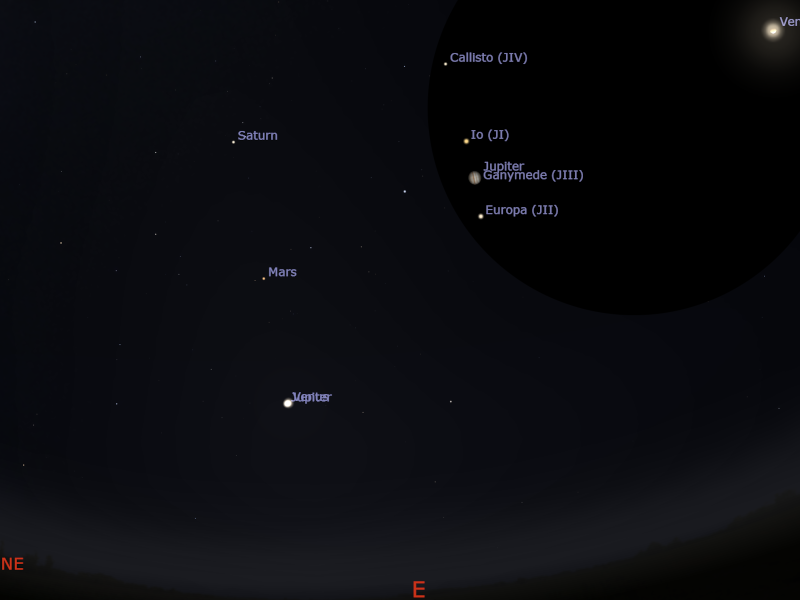
Similar views will be seen from the rest of Australia at the equivalent local time (90 minutes before sunrise, click to embiggen).
The May edition of Southern Skywatch
is now up. The planetary action is in the morning sky with four bright planets, Venus, Mars, Saturn and Jupiter in the morning sky.
May 1; Venus and Jupiter spectacularly close in the morning sky. May 1; New Moon. May 2; Mercury and thin crescent Moon close low above western horizon in the evening. May 5; apogee Moon. 7-8 May; Eta Aquariid meteor shower. May 5-9; Saturn and Asteroid Vesta close. May 9; First Quarter Moon. May 16; Full Moon. May 18; perigee Moon. May 18; Neptune and Mars at their closest. May 23; Last Quarter Moon. May 22-23; the waning Moon is close to Saturn. May 25; the crescent Moon forms a triangle with Mars and Jupiter. May 27; the thin crescent Moon is above Venus. May 28-31; Mars and Jupiter close.
Mercury returns to the evening sky late in the month but is barely visible above the horizon deep in the twilight.
Venus starts the month spectacularly close to Jupiter on the 1st. The pair will be 0.2° apart and will fit into the field of view of medium power telescope eye pieces. The phase of Venus, Jupiter’s bands and its Moons should be visible. At this time the pair form a line with Saturn and Mars, with Jupiter below, easily seen an hour and a half before sunrise. After this spectacular paring, Venus sinks towards the horizon over the month as Jupiter rises towards Mars. On May 27 the thin crescent Moon is above Venus.
Mars
is high the morning sky in May, Mars makes an attractive line with Saturn, Venus and Jupiter at the beginning of the month, and is readily visible an hour an hour and a half before sunrise, above bright Venus and Jupiter. Over the month Jupiter rises towards Mars. Mars's reddish colour contrasting with the yellowish colour of Jupiter and the bright white of Venus.
On the 18th and 19th Mars passes within 0.7 ° of Neptune, the pair potentially visible in binoculars and medium field telescope eye pieces. From the 28th to the 31st Mars and Jupiter are within 1 ° (around a finger width) of each other. They are closest on the 30th, when at 0.7 ° apart the pair visible in binoculars and medium field telescope eye pieces (Jupiter’s moons will be visible, but details on Jupiter harder to see, Mars will be a featureless disk). On May 25 the crescent Moon forms a triangle with Mars and Jupiter.
Jupiter continues to rise higher in the morning sky. Jupiter starts the month spectacularly close to Venus on the 1st. The pair will be 0.2° apart and will fit into the field of view of medium power telescope eye pieces. The phase of Venus, Jupiter’s bands and its Moons should be visible. After this spectacular paring, Venus sinks towards the horizon over the month as Jupiter rises towards Mars. From the 28th to the 31st Mars and Jupiter are within 1 ° (around a finger width) of each other. They are closest on the 29th, when at 0.7 ° apart the pair visible in binoculars and medium field telescope eye pieces (Jupiter’s moons will be visible, but details on Jupiter harder to see, Mars will be a featureless disk).
Saturn climbs higher in the morning sky and is readily visible an hour and a half before sunrise. Saturn is a worthwhile telescope object this month. Between the 5th and 9th Saturn is within 1 ° of the asteroid 4 Vesta, and should be easily seen with binoculars and wide field telescope eye pieces, Saturn’s rings will just be visible, Vesta will be a bright dot that moves night to night. On the May 22 and 23; the waning Moon is close to Saturn.
Moon: May 5; apogee Moon and May 18; perigee Moon.Labels: southern skywatch
Friday, April 01, 2022
Southern Skywatch April 2022 edition is now out!

Similar views will be seen elsewhere in Australia at the equivalent local time (60 minutes before sunrise), click to embiggen.
The April edition of Southern Skywatch
is now up. The planetary action is in the morning sky with four bright planets, Venus, Mars, Saturn and Jupiter in the morning sky.
April 1; Mars, Saturn and Venus form a line in the morning twilight. April 1; New Moon. April 4, daylight savings ends. April 5; Saturn and Mars very close. April 8; apogee Moon. April 9; First Quarter Moon. April 13; Neptune and Jupiter at their closest. April 17; Full Moon. April 23; Last Quarter Moon. April 20; perigee Moon. April 25; the crescent Moon is close to Saturn. April 26; the crescent Moon is close to Mars. April 27; the thin crescent Moon is above the pair of Jupiter and Venus. April 28; the thin crescent Moon is below Jupiter and Venus. April 28; Venus spectacularly close to Neptune. April 30; Venus and Jupiter close.
Mercury returns to the evening sky late in the month but is barely visible above the horizon deep in the twilight.
Venus starts the month in a line with Saturn and Mars, with Jupiter below, easily seen an hour before sunrise. Venus sinks towards the horizon over the month for a close approach to Neptune and Jupiter.
On the 28th Venus is a mere 14 arc seconds from Neptune, this is a telescope only event best seen around 5 am from Eastern and central sites, sadly Venus does not rise in WA until after closest approach. Venus is a gibbous phase in telescopes.
Venus and Jupiter continue to come closer and on the 30th the pair are just 1degree (one finger width) apart. On April 27 the thin crescent Moon is above the pair of Jupiter and Venus. On April 28 the thin crescent Moon is below Jupiter and Venus.
Mars is high the morning sky in April, Mars makes an attractive line with Venus and Saturn at the beginning of the month, and is readily visible an hour before sunrise, above bright Venus and dim Saturn. Mars's reddish colour contrasting with the yellowish colour of Saturn and the bright white of Venus.
Mars comes close to Saturn in the early part of the month, the pair are closest on the 5th and 6th, being 0.5 deg (half a finger-width apart, they will fit easily into medium power telescope eye pieces. Mars then leaves Saturn behind as Saturn rises higher in the morning sky. On April 26 the crescent Moon is close to Mars.
Jupiter continues to rise higher in the morning sky, although it is not a good telescopic target most of this month. On the 13th Jupiter is 0.1 degree from Neptune, the pair easily fit into the field of view of medium sized telescope eyepieces, but with Jupiter fairly low to the horizon this may be difficult to view. On April 27 the thin crescent Moon is above the pair of Jupiter and Venus. On April 28 the thin crescent Moon is below Jupiter and Venus. On the 30th Jupiter will be 1 degree from Venus, and even closer on the 1st of May and reasonably well placed for telescopic viewing.
Saturn climbs higher in the morning sky and is readily visible an hour and a half before sunrise. Saturn is a worthwhile telescope object this month. Mars come close to Saturn in the early part of the month, the pair are closest on the 5th and 6th, being 0.5 deg (half a finger-width apart, they will fit easily into medium power telescope eye pieces. Saturn then leaves Mars behind as Saturn rises higher in the morning sky. On the April 25 the crescent Moon is close to Saturn.
Moon: April 8; apogee Moon and April 20; perigee Moon.Labels: southern skywatch
Tuesday, March 01, 2022
Southern Skywatch March 2022 edition is now out!

Morning sky on Tuesday March 29 showing the eastern morning sky as seen from Adelaide at 6:02 am ACDST (90 minutes before sunrise). Saturn and Venus are at their closest and the thin crescent moon, Mars, Venus and Saturn form a triangle.
Similar views will be seen elsewhere in Australia at the equivalent local time (90 minutes before sunrise), click to embiggen.
The March edition of Southern Skywatch
is now up. The main action is now in the morning skies with five bright
planets, Venus, Mars, Mercury and Saturn (and then Jupiter) form nice patterns.
March 1; the thin crescent Moon, Mercury, and Saturn form a triangle in the eastern sky below the pair of Mars and Venus in the morning twilight. March 3; New Moon. March 3; Saturn and Mercury very close. March 10; First Quarter Moon. March 11; apogee Moon. March 16; Mars and Venus at their closest. March 18; Full Moon. March 21; Earth at Equinox. March 25; Last Quarter Moon. March 24; perigee Moon. March 28; Planetary massing of the thin crescent moon, Mars, and Venus form a line, with Saturn to the side of Venus in the morning twilight. March 29; Planetary massing, Saturn and Venus are at their closest and the thin crescent moon, Mars, Venus and Saturn form a triangle.
Mercury is in the morning sky, and is readily visible in the eastern morning twilight in the first half of the month then, about an hour before sunrise. Then it rapidly sinks towards the horizon. Mercury starts the month below the pair of Venus and Mars, just above Saturn. On the 1st, the thin crescent Moon, Mercury, and Saturn form a triangle in the eastern sky an hour before sunrise below the pair of Mars and Venus. On the 3rd Saturn and Mercury are very close (0.7 degrees apart) and can be seen together in medium power telescope eye pieces. Mercury sinks lower as the month progresses, and on the 21st and 22nd Mercury and Jupiter are close low in the twilight, within a binocular field of each other.
Venus starts the month high in the eastern morning twilight and is readily visible an hour before sunrise below Mars. Venus and Mars form a pair which slowly come closer over the Month, the pair are closest on the 16th at about 4 degrees, then they draw apart again. Saturn comes closer to Venus during the month. On the 28th the thin crescent moon, Mars, and Venus form a line, with Saturn to the side of Venus. On the 29th, Saturn and Venus are at their closest and the thin crescent moon, Mars, Venus and Saturn form a triangle. Venus is a crescent/First quarter shape in telescopes at the beginning of the month and will wax as the month progresses to a half moon shape by the end of the month.
Earth is at equinox on Monday, 21 March. At this time day and night are roughly equal in duration.
Mars is high the morning sky in March, Mars makes an attractive triangle with Venus and Mercury at the beginning of the month, and is readily visible an hour before sunrise, above bright Venus. Venus and Mars form a pair which slowly come closer over the month, the pair are closest on the 16th at about 4 degrees, then they draw apart again. Mars slowly brightens but is outshone by brilliant Venus. Later in the month Mars, Venus and Saturn form a triangle. On the 28th and then the 29th the sight of the pair of Venus and Mars, the thin crescent Moon, and Saturn in the eastern sky an hour before sunrise will be impressive.
Jupiter returns to the morning sky from mid month but is really only visible in the twilight glow in the last part of the month. On the 21st and 22nd Mercury and Jupiter are close low in the twilight, within a binocular field of each other, and you may need binoculars to see them clearly. on the 31st the thin crescent Moon is close to Jupiter low in the twilight.
Saturn climbs higher in the morning sky in March, first climbing towards Mercury tehn Venus. On the 3rd Saturn and Mercury are very close (0.7 degrees apart) and can be seen together in medium power telescope eye pieces. Saturn comes closer to Venus during the month. On the 28th the thin crescent moon, Mars, and Venus form a line, with Saturn to the side of Venus. On the 29th, Saturn and Venus are at their closest and the thin crescent moon, Mars, Venus and Saturn form a triangle.
Moon: Perigee March 24 and at apogee March 11.Labels: southern skywatch
Tuesday, February 01, 2022
Southern Skywatch February 2022 edition is now out!
February 1; New Moon. Feb 1-Feb 28; Mars, Venus and Mercury form a triangle in the morning twilight. February 3; the thin crescent moon near Jupiter, low in the evening twilight. February 11; apogee Moon. February 6; Mars very close to globular cluster M22 in the morning. February 8; First Quarter Moon. February 17; Full Moon. February 24; Last Quarter Moon. February 27; perigee Moon. February 27; Planetary massing of Venus, Mars and crescent moon with Mercury and Saturn below in the morning twilight. February 27; Planetary massing of Venus, Mars and crescent moon (this time the Moon is between Mars and Mercury) with Mercury and Saturn below.
Mercury is in the morning sky, and is readily visible in the eastern morning twilight from about the second week on, about an hour before sunrise. This is the best time this year to see Mercury in the morning sky. Mercury is below the pair of Venus and Mars, forming a nice triangle for most of the month. Mercury is at its furthest from the Sun on the 17th, and then sinks towards the horizon, later in the month in on the rising Saturn and by the end of the Month it is a hand-span above Saturn. On the 27th and then the 28th the sight of the pair of Venus and Mars, the thin crescent Moon, Mercury, and Saturn in the eastern sky an hour before sunrise will be impressive.
Venus starts the month in the eastern morning twilight and is readily visible an hour before sunrise below Mars. Venus and Mars form a pair which slowly come closer over the Month. Mars slowly brightens but is outshone by brilliant Venus.
Venus is a thin crescent in telescopes at the beginning of the month and will wax as the month progresses. Venus will be at its greatest brilliance on the 13th, when its appearance is like that of the first quarter moon.
Mars starts February in the lid of the “teapot of Sagittarius”, Mars makes an attractive triangle with Venus and Mercury for most of the month, and is readily visible an hour before sunrise, above bright Venus.
On the 2nd Mars is close to the globular cluster M28 (1 degree) and on the 6th close (0.3 deg) to the globular cluster M22. And don’t forget, on the 27th and then the 28th the sight of the pair of Venus and Mars, the thin crescent Moon, Mercury, and Saturn in the eastern sky an hour before sunrise will be impressive.
Jupiter is low in the twilight and is close to the thin crescent Moon on the 3rd. after this it is rpidly lost in the twilight.
Saturn returns to the morning sky late in February, rising to meet Mercury.
Moon: Perigee February 27 and at apogee February 11.
Labels: southern skywatch
Friday, December 03, 2021
Southern Skywatch December 2021 edition is now out!

The inset shows the telescopic view of Venus. Similar views will be seen throughout Australia at the equivalent local time (90 minutes after sunset, click to embiggen).
The December edition of Southern Skywatch is now up.
December 3; the thin crescent moon near Mars, low in the morning twilight. December 4; New Moon. December 4; perigee Moon. December 6; Crescent moon forms a line with Venus, Saturn and Jupiter. December 7; Venus is close to the crescent Moon. December 8; Moon between Saturn and Jupiter. December 9; waxing Moon close to Jupiter. December 10; waxing Moon forms a line with Jupiter, Saturn and Venus. December 11; First Quarter Moon. Morning December 14; Geminid meteor shower peaks. December 16-25; Comet C/2021 A1 Leonard visible. December 18; apogee Moon. December 19; Full Moon (apogee ”mini” moon). December 27; Last Quarter Moon. January 1 2022; Morning occultation of Mars .
Mercury is low in the evening twilight from the middle of this month of this month and encounters Venus. On the 27 Venus and Mercury can been seen low in the twilight half an hour after sunset together, and the pair are at their closest on the 29th (with Venus below).
Venus is easily visible at the beginning of the month in the evening sky from 30 minutes after sunset (I can see it as early as 5 minutes after sunset) until well after the sky is fully dark. Venus, Saturn and Jupiter make a nice line in the evening sky in December. Venus is at its greatest brilliance on the 4th, then rapidly moves to the horizon. Venus is a very obvious crescent in even small telescopes and will get thinner as it heads towards the horizon, by the end of the Month it may be visible as a crescent in binoculars.
Earth is at solstice on Wednesday the 22nd, when the day is longest.
Mars is low in the twilight until late in the month. On the 3rd the thin crescent moon is close to Mars. On January 1, 2002 Mars is occulted by the thin crescent Moon.
Jupiter is readily visible from astronomical twilight and is now lowering into the western evening sky. Jupiter still bright and an excellent object in even small telescopes, but the window for telescopic observation is closing. At the beginning of this month at astronomical twilight, we can enjoy the sight the sight of bright Venus in the west forming a line with Saturn and bright Jupiter in the north-west. Once Venus has set Jupiter dominates the night sky. by the end of the Month Mercury has replaced Venus.
Saturn can be easily seen from nautical twilight (an hour after sunset) during December. Saturn is telescopically best at astronomical twilight, when the sky is fully dark, but from mid-month it is too close to the horizon for good telescopic observation.
The moon visits the bright planets in Turn, Venus on the 7th, Saturn on the 8th then Jupiter on the 9th. The Moon will be close enough to Jupiter for the pair to fit in the field of view of 10x50 binoculars. The sight of the three bight planets together with the Moon will be particularly beautiful.
Moon: Perigee December 4 and at apogee December 18
Labels: southern skywatch
Wednesday, November 03, 2021
Southern Skywatch November 2021 edition is now out!
 Evening sky on Monday, November 8 looking west as seen from Adelaide
at 21:27 ACDST (90 minutes after sunset). Venus is close to the Trifid and Lagoon nebulae and the Crescent Moon.
Evening sky on Monday, November 8 looking west as seen from Adelaide
at 21:27 ACDST (90 minutes after sunset). Venus is close to the Trifid and Lagoon nebulae and the Crescent Moon.
The
insets shows the telescopic view of Venus at this time and the
binocular view of Venus and the Trifid nebula. Similar views will be
seen throughout Australia at the equivalent local time (90 minutes after
sunset, click to embiggen).
The November edition of Southern Skywatch is now up.
This month the planetary action remains mostly in the evening skies, with 3 bright planets visible after the sky is fully dark. Venus blazes in the west not far from the pair of Saturn and Jupiter in the north-west. Mercury is low the morning twilight. Mars returns to the morning sky, but never really gets very high. The Moon does a planet dance with bright Venus, Saturn and Jupiter. The Leonid meteor Shower is washed out by the bright full Moon. Twilight partial Lunar eclipse.
Mercury is low in the morning twilight this month and never really gets high enough to observe. On the 1st Mercury is just under two finger-widths from the eastern horizon half an hour before sunrise. By the 15th Mercury lost in the twilight in the morning sky. Mercury returns to the evening sky in December, best seen in late December
Venus is easily visible in the evening sky from 30 minutes after sunset (I can see it as early as 5 minutes after sunset) until well after the sky is fully dark. Mercury, Saturn and Jupiter make a nice line in the evening sky in November. At astronomical twilight, we can enjoy the sight the sight of bright Venus in the west and bright Jupiter in the north-west with dimmer Saturn between them. Venus dominates the evening twilight and early evening sky as it passes through the "teapot" of Sagittarius. Venus is a distinct "Half Moon" shape at the beginning of the month and becomes more crescent shaped towards the end of the month.
From the 5th to the 9th November Venus will be in binocular range to the Trifid and lagoon nebulae. From the 11th to the 16th Venus is in the lid of the teapot. Venus is within binocular range of the bright globular cluster M22 from the 13th the 17th. On the 8th the crescent Moon is within binocular range of Venus. On the 9th the crescent Moon is between Venus and Saturn.
Mars Mars returns to the morning sky in November, but is lost in the twilight until late in the month.
Jupiter is readily visible from astronomical twilight and is now lowering into the western evening sky. Jupiter was at opposition, when it was biggest and brightest as seen from Earth, on August 19th, but is still bright and an excellent object in even small telescopes. This month at astronomical twilight, we can enjoy the sight the sight of bright Venus in the west forming a line with Saturn and bright Jupiter in the north-west. Once Venus has set Jupiter dominates the night sky.
On the 9th the crescent Moon is between Venus and Saturn. On the 10th the waxing moon forms a line with Saturn and Jupiter. On the 11th the first quarter moon is close to Jupiter between Jupiter and Saturn. Then on the 12th the waxing moon again forms a line with Jupiter and Saturn 9and more distantly, Venus). Telescopically Jupiter will be best evening to the early morning when it is highest above the northern horizon.
Saturn can be easily seen from astronomical twilight (an hour and a half after sunset) during November. Saturn was at Opposition, when it was biggest and brightest as seen from Earth, on the 2nd of August. However it will remain great viewing for many weeks to come.
On the 9th the crescent Moon is between Venus and Saturn. On the 10th the waxing moon forms a line with Saturn and Jupiter. On the 11st the first quarter moon is close to Jupiter between Jupiter and Saturn. Then on the 12th the waxing moon again forms a line with Jupiter and Saturn 9and more distantly, Venus). Telescopically Saturn will be best from astronomical twilight to around 11pm when it is highest above the north-western horizon. At the beginning of the month Saturn should be best for scopes around 9:30 pm local time when the sky is fully dark.
November 6; perigee Moon. November 21; apogee Moon.
Labels: southern skywatch




 Click to read about or order
 Click to read about or order
 Click to read about or order
 Click to read about or order


